
Morocco’s World Cup Surge: How the Netherlands and Germany Lost Control
Introduction
A World Cup knockout-stage analysis package built around Morocco’s rise, the Netherlands’ collapse from a winning position, Germany’s tactical crisis, and the growing debate over extra time and penalty preparation in modern tournament football.
Match Preview
Morocco vs Canada Preview: Morocco’s Next Test Is About More Than Momentum
Morocco carry more than a result into Canada test
Morocco’s next World Cup assignment comes against Canada on July 4, after a dramatic route through the round of 32. Morocco advanced by beating the Netherlands on penalties after a 1-1 draw over 120 minutes, while Canada came through their own knockout tie with a 1-0 win over South Africa.
That sets up a meeting with a clear tactical tension: Morocco are now a proven knockout side, but Canada arrive with the confidence of having survived a tight, high-pressure game of their own.
Why Morocco are no longer just a “dark horse”
Calling Morocco a surprise package now feels too simple. Their win over the Netherlands was not built on chaos. It was built on patience, defensive resilience, emotional control and a penalty process they appeared to trust.
Yassine Bounou remains central to that identity. His penalty presence is not just about reaction saves; it is about pressure, timing, body language and forcing takers to make decisions under stress. If a knockout match drifts toward another low-scoring finish, Morocco will not fear that territory.
Their broader strength is in the middle and back of the team. Even when their forward line does not dominate, Morocco have enough quality behind the ball to stay alive, create from set pieces or second phases, and keep opponents emotionally uncomfortable.
The Canada problem
Canada’s 1-0 win over South Africa matters because it shows they are not merely entering this tie as a side happy to be here. They have already handled knockout tension, protected a narrow margin and earned the right to test Morocco in a different way from the Netherlands.
For Morocco, the key issue is whether they can impose enough attacking threat before the game becomes another survival contest. Their defensive structure is a weapon, but the deeper a team goes into a World Cup, the more it needs moments of authority with the ball as well as without it.
Key tactical questions
Morocco’s first question is whether they can turn control without possession into real attacking pressure. If Canada are disciplined and avoid emotional mistakes, Morocco may need more from their forwards and runners beyond simply waiting for set pieces, transitions or penalties.
The second question is game state. If Morocco score first, they are comfortable protecting space. If Canada score first, Morocco’s attacking ceiling will be tested more severely.
The third question is fatigue. Knockout wins that go through extra time and penalties carry both emotional fuel and physical cost. Morocco’s staff must judge whether the same formula can be repeated or whether this match requires a more proactive start.
What to watch
Watch Bounou’s authority in the penalty area, Morocco’s centre-backs on set pieces, and the balance between caution and ambition. Morocco have earned respect because they know how to drag elite opponents into uncomfortable matches. Against Canada, the challenge is to show that their World Cup story is not only about resistance, but progression.
Post-Match Review
Netherlands and Germany Lost the Same Thing: Control
Knockout football punished reputation
The second day of the 2026 World Cup round of 32 delivered a sharp reminder: pedigree does not manage pressure by itself.
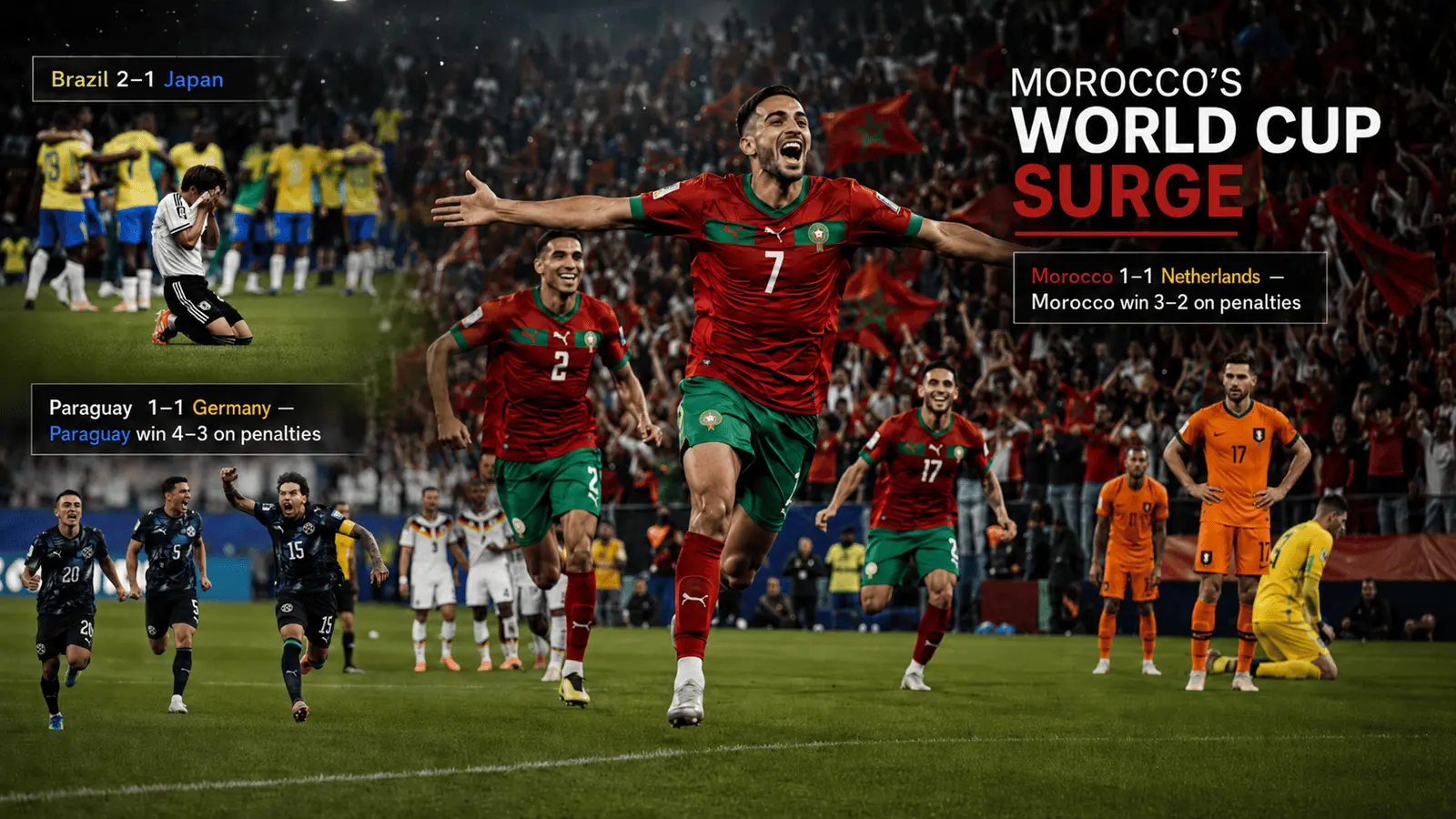
The Netherlands led Morocco through Cody Gakpo’s 72nd-minute goal, created after Wout Weghorst helped turn a direct action into a decisive attacking moment. Morocco responded in stoppage time, with Issa Diop heading in at 90+1 to force extra time. After a 1-1 draw over 120 minutes, Morocco won 4-3 on penalties.
Germany suffered a different kind of collapse against Paraguay. That match also finished 1-1 after extra time, before Paraguay advanced through a penalty shootout. For a nation with Germany’s tournament and penalty heritage, the symbolism was brutal.
The Netherlands’ failure was game management
The Dutch problem was not that they never found a route to goal. In fact, Gakpo’s opener came from a direct pattern that worked: long distribution, aerial presence, pressure on the second ball, and a late runner arriving to finish.
The problem was what followed. The Netherlands did not convert that emotional high point into control. Morocco were allowed to remain close enough to believe, and once Diop found space late, the match moved into the kind of psychological terrain Morocco were willing to inhabit.
Ronald Koeman’s side will face familiar questions: why did the team become more passive after going ahead, why did the final defensive phase look so stretched, and why did the penalty shootout feel like Morocco’s preferred script rather than a neutral lottery?
Morocco’s win was not random
Morocco’s achievement should not be reduced to the word “upset”. This is a side with tournament maturity, defensive belief and a goalkeeper who changes the emotional geometry of penalty shootouts.
Bounou’s presence against the Netherlands mattered before the ball was even struck. His movement, positioning and willingness to offer or close angles placed extra pressure on Dutch takers. Teun Koopmeiners and Wout Weghorst scored for the Netherlands, but Justin Kluivert and Quinten Timber failed to convert before Crysencio Summerville’s attempt was saved in the fifth round. Morocco, after early drama of their own, finished the shootout through Ismael Saibari.
That is not luck alone. That is preparation meeting pressure.
Germany’s problem was different
Germany’s exit was less about conservatism and more about complexity. The debate around Julian Nagelsmann’s structure, the balance between Florian Wirtz and Jamal Musiala, and the role of a true centre-forward will only intensify.
Germany have exceptional attacking talent, but knockout football asks for function, not just quality. If too many players want to receive like No. 10s, tempo can die. If a centre-forward is selected but not supplied, the shape becomes theoretical rather than threatening.
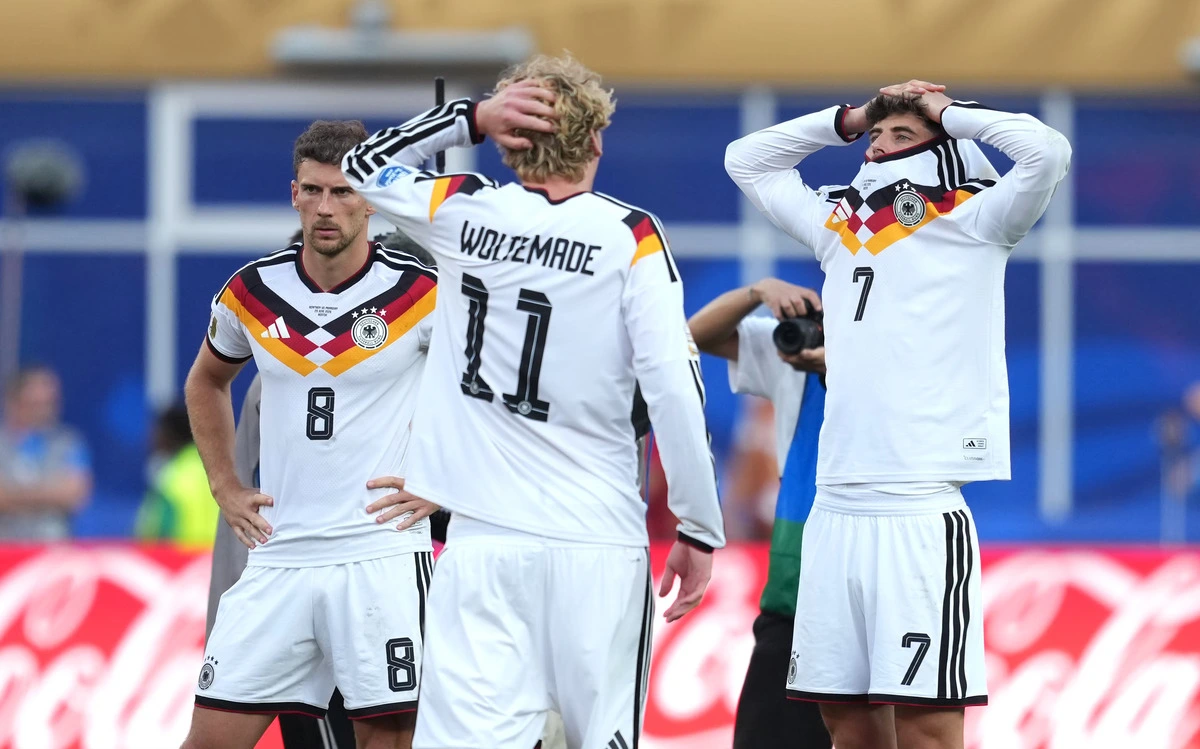
Paraguay deserve credit here. Their defensive reputation was not invented overnight, and their ability to stay compact made Germany’s attacking questions look even more severe.
The bigger lesson
The Netherlands and Germany did not lose in identical ways, but they lost the same essential thing: a clear path through pressure.
The Netherlands had the lead and allowed the match to become a penalty contest. Germany had the players and allowed the structure to become a puzzle. Morocco and Paraguay did what mature knockout teams do: they stayed alive long enough for the favourite to start doubting itself.
Team Analysis
Morocco and Paraguay Are Not Miracles — They Are Built for Knockout Football
The end of the lazy upset narrative
Morocco beating the Netherlands and Paraguay eliminating Germany will be described by some as shocks. But that framing misses what these teams actually did.
Neither Morocco nor Paraguay approached knockout football as a beauty contest. They treated it as a survival environment: protect central spaces, keep the match close, force the favourite to solve problems repeatedly, and trust the pressure to change the game.
That is not romantic underdog football. It is tournament competence.
Morocco: structure, belief and penalty authority
Morocco’s identity is now well established. They can defend for long periods without looking emotionally broken. They can accept low-tempo phases. They can make set pieces and second balls matter. And when a match reaches penalties, Bounou gives them a psychological advantage few sides can match.
The Netherlands found a breakthrough, but Morocco did not unravel. That matters. Many teams concede late in a knockout game and lose their shape. Morocco instead found a stoppage-time equaliser through Issa Diop and carried the match into a shootout they were prepared to embrace.
There are still attacking questions. Morocco’s front line does not always look as naturally decisive as the rest of the team. But when the midfield and defence contribute to chance creation and pressure, the side remains dangerous even without constant forward dominance.
Paraguay: defensive seriousness, not a free pass
Paraguay’s win over Germany should also be read through structure. They were not simply waiting for Germany to fail; they helped create the conditions for that failure.
Against an opponent full of technical players, Paraguay’s compactness made Germany’s possession feel slower and more crowded. The more Germany searched for perfect combinations, the more Paraguay benefited from delay.
That is the essential lesson: a disciplined defensive side does not need to outplay a favourite in every phase. It only needs to make the favourite’s preferred route unreliable.
What the traditional powers got wrong
The Netherlands became too passive after taking control of the score. Germany seemed too invested in solving the match through layered attacking theory.
Those are different mistakes, but both are dangerous in knockout football. One invites pressure by retreating from initiative. The other invites pressure by removing simplicity.
Morocco and Paraguay were clearer. They knew what kind of match they could win. The Netherlands and Germany looked less certain when the game became uncomfortable.
Why this trend matters
The expanded World Cup format creates more knockout matchups and more chances for structured teams to expose fragile favourites. This does not mean elite talent matters less. It means talent needs a usable plan.
Morocco and Paraguay have shown that defensive resilience, penalty preparation and emotional discipline are not secondary details. In tournament football, they can be the main event.
Controversy and Talking Points
Is Extra Time Becoming Football’s Weakest Half Hour?
The problem with the extra-time ritual
Netherlands vs Morocco offered drama before and after extra time. Cody Gakpo scored in the 72nd minute. Issa Diop equalised in stoppage time. Morocco then won the penalty shootout 4-3.
The 30 minutes in between raised a more uncomfortable question: what is extra time actually giving modern football?
In theory, extra time rewards ambition, endurance and tactical adjustment. In practice, many knockout matches become increasingly cautious. Players are tired, coaches fear one mistake, and both sides often know penalties are close enough to become the safest destination.
Why teams accept the slowdown
For a team like Morocco, a low-event extra time can be rational. If you trust your goalkeeper, your penalty preparation and your emotional discipline, then reaching a shootout is not failure. It is a route to victory.
That does not make Morocco cynical. It makes them realistic.
The issue is structural. Modern players already carry heavy match loads, travel demands, climate stress and tournament pressure. By extra time, quality often drops just as the stakes peak.
Bounou and the penalty debate
Bounou’s shootout performance also reopened the familiar goalkeeper question: when does movement become gamesmanship, and when does it become infringement?
His early movement and angle management were a major part of Morocco’s win, and the key point is that penalty goalkeeping is not simply about guessing correctly. It is about shaping the taker’s decision while staying within the laws.
That psychological layer is part of the sport. But it also makes shootouts feel less random than many fans claim.
Should football change the format?
There is no perfect answer. Direct penalties after 90 minutes would be cleaner, but it would remove a traditional test of endurance. Shorter extra time might protect quality, but could still produce caution. Golden goal would increase jeopardy, but history showed it can make teams even more afraid.
What Netherlands vs Morocco proved is not that extra time must be abolished immediately. It proved the debate is legitimate.
If the best moments of a knockout match are the late equaliser and the shootout, while the extra 30 minutes become a shared act of survival, football has to ask whether tradition is still serving the spectacle.