
World Cup Knockout Talking Points: Colombia’s Threat, England’s Flaws and the Drama of the Last One of Best-Performing Third-Placed Team
Introduction
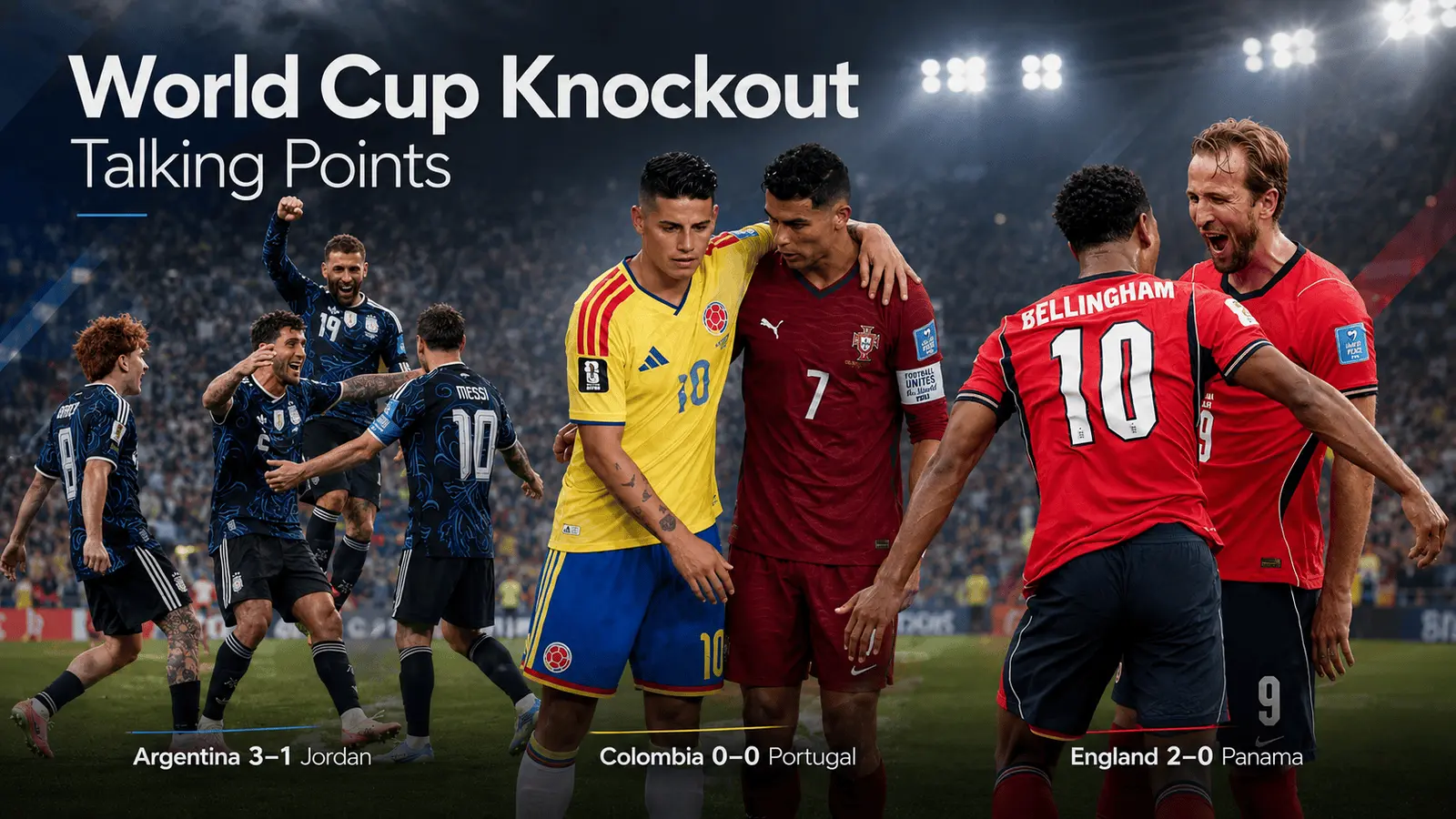
A World Cup-focused football analysis package built around knockout-stage questions, tactical trends and tournament narratives: England’s creativity problem, Colombia’s dark-horse profile, Argentina’s possible danger path, Canada’s uncertainty around star power, and the wider debate over how expanded group-stage formats create drama, emotion and controversy.
Match Preview
World Cup Knockout Preview: Colombia’s Threat, England’s Questions and Canada’s Star Power Test
The most interesting stage of a World Cup often begins before the knockout whistle is blown. It begins in the space between qualification and confrontation: when teams know the margins are shrinking, when reputations matter less than match-ups, and when one tactical flaw can become a tournament-ending problem.
Three storylines stand out.
First, Colombia have the profile of a side nobody should want to meet. Second, England remain a team with enough individual quality to win difficult games but enough attacking rigidity to worry their supporters. Third, Canada’s meeting with South Africa carries a classic tournament question: can one elite-level player alter the whole structure of a match if the opponent has the athletic tools to resist?
Colombia: the dark horse with a real structure
Colombia’s appeal is not simply that they are emotional, aggressive or technically gifted. The stronger argument is structural. Their best version appears to give James Rodriguez what older creative midfielders need most: protection, passing lanes and enough time to make the final ball matter.
That is a major distinction. Many national teams carry talented attackers but fail to build conditions for them. Colombia, by contrast, look like a team designed to let their organiser receive the ball facing forward rather than constantly fighting pressure with his back to goal. When the surrounding midfield and wide players do the running, pressing and recovery work, James can become less of a luxury and more of a control point.
Luis Diaz gives the side a different kind of threat: direct running, emotional force and the ability to stretch defenders who are already worried about central creativity. Add the possibility of useful depth from the bench and Colombia become more than a romantic outsider. They become a genuine bracket problem.
If Argentina and Colombia are placed on a collision course, the match-up would be about far more than star names. Argentina may carry the greater pedigree and the most recognisable attacking reference points, but Colombia’s case rests on balance: creators protected by workers, wide threats supported by numbers, and a coach with enough South American football intelligence to prepare for the psychological as well as tactical edge of the contest.
England: pressure without enough poetry
England’s tournament problem is familiar but still serious. A strong press can win territory. Physical midfielders can help dominate second balls. Wide players can deliver volume. Harry Kane can still give the attack a reference point.
But knockout football usually asks a harder question: what happens after the ball is recovered?
If England press well but use possession slowly, the advantage fades. If the pattern becomes too predictable — wide delivery, Kane as target, midfield runners attacking the second phase — good defensive opponents will adjust. Physical power can raise a team’s floor, but creativity raises its ceiling.
That is why the balance around Jude Bellingham matters so much. Bellingham can drive, duel, arrive in decisive areas and give England the emotional authority of a true tournament leader. But asking him to be the physical engine, the connector and the match-winner is a heavy load. England need more than effort from their attacking structure. They need variety.
The right-side question is also unavoidable. Bukayo Saka’s status and quality are not in doubt, but tournament selection is about the next match, not reputation alone. If England’s right flank is not creating enough separation or unpredictability, alternatives such as a more direct winger or a reshaped attacking line deserve discussion.
England are dangerous. But dangerous is not the same as fluent.
Canada vs South Africa: can one player change the match?
Canada’s situation is built around a different kind of uncertainty. If Alphonso Davies is available and sharp, he changes the emotional and tactical temperature of any game. His recovery speed, ball-carrying and ability to turn defence into attack can give Canada a route through pressure that few players can provide.
But there is a difference between a star returning and a star being fully decisive.
South Africa should not be treated as a passive opponent waiting to be overwhelmed by one name. If they can match the running, absorb wide pressure and force the game into repeated duels, Canada may need more than Davies’ presence. They will need collective timing: when to release him, when to protect the space behind him, and how to avoid becoming too dependent on one flank.
This is the kind of match where the first tactical adjustment may matter as much as the first chance. If Canada can use Davies to tilt the pitch without leaving themselves open, they gain a clear route. If South Africa keep the contest physical, transitional and emotionally uncomfortable, the game becomes far less predictable.
The bigger tournament lesson
The expanded tournament format has changed the rhythm of the group stage. More teams mean more calculation, more scoreboard-watching and more stories built around sides whose fate is not entirely in their own hands. That can make the football messy, but it also makes the drama human.
Knockout football strips that away. From here, the best teams cannot rely on sympathetic narratives, favourable calculations or the hope that another result opens the door. They have to solve the opponent in front of them.
That is why Colombia are so intriguing, why England remain so debatable, and why Canada’s star-power question against South Africa deserves more than a simple headline.
Team Analysis
Colombia and England Show Two Very Different Ways to Build a World Cup Team
Tournament football is not won by talent lists. It is won by the relationship between talent and structure.
That is why Colombia and England make such an interesting contrast. One side’s appeal comes from how naturally its roles seem to fit. The other has elite names, physical security and tournament pedigree, but still faces a familiar question: where does the invention come from when the first plan slows down?
Colombia’s model: protect the creator
The most persuasive case for Colombia is not that they are a surprise package. It is that they make footballing sense.
James Rodriguez remains the kind of player who can decide the rhythm of an attack if the team around him accepts the trade-off. He should not be asked to cover every blade of grass, win every duel or press like a box-to-box midfielder. His value is in receiving cleanly, turning the game forward and finding passes that others do not see.
Colombia’s structure appears to understand that. The midfield and wide players provide the labour. James provides the clarity. When that balance works, the whole team looks more coherent: the ball reaches the right player in the right zone, wide runners attack with purpose, and the forwards receive service rather than scraps.
This is how a creative veteran becomes an asset rather than a defensive liability. The team does not hide him; it builds the game around what he still does at a high level.
England’s model: strong floor, uncertain ceiling
England’s strengths are obvious. They can press. They can compete physically. They can attack the box with numbers. They have Kane as a central reference point and Bellingham as a player capable of changing the tone of a match through force of personality and timing.
But there is a difference between having weapons and having a fully connected attack.
When England win the ball high, the next action has to be sharper. The pass after the regain, the supporting run, the angle into midfield and the decision around the box all need to arrive quickly. If those details are slow, a promising press becomes just another spell of possession against a reset defence.
That is where the creativity debate becomes more than a selection argument. England can choose power and security, but knockout opponents often demand subtlety. A team that relies too heavily on wide service, second balls and Bellingham’s timing may still win matches, but it risks becoming predictable against disciplined low blocks.
The Bellingham burden
Bellingham’s rise as England’s emotional and tactical centre is both a strength and a warning sign.
He gives the side maturity, edge and penalty-box threat. He can turn ordinary possession into momentum because he plays with urgency. But the more England depend on him to provide everything — intensity, progression, leadership and end product — the more fragile the system becomes.
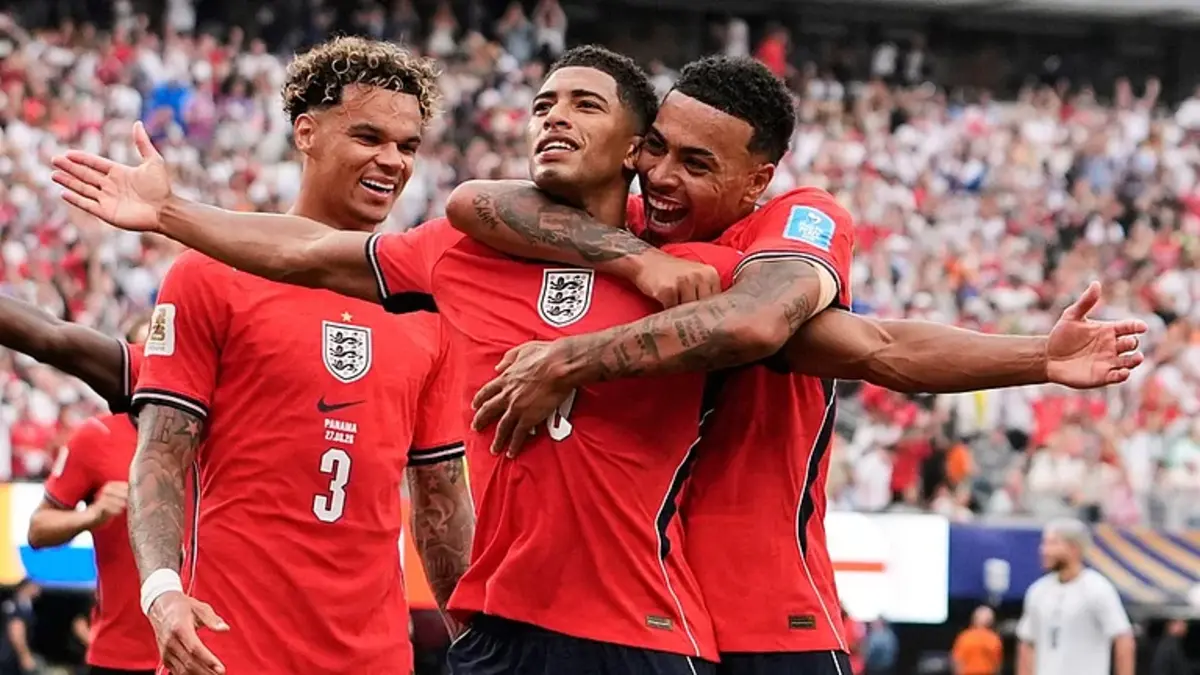
Great tournament teams usually distribute responsibility. England need to ensure Bellingham is not carrying too much of the attacking imagination by himself.
Why Colombia’s balance feels dangerous
Colombia’s threat is different. They do not need to dominate the global conversation to become a problem. In fact, being slightly under-discussed may suit them. A team with clear roles, strong emotional backing and enough depth to change games can move through a bracket before the wider audience fully accepts how dangerous it is.
Luis Diaz gives Colombia a high-level wide threat. James gives them the passing brain. The supporting cast gives them the running power. That combination is exactly what many supposedly bigger teams spend tournaments trying to find.
The knockout lesson
England’s question is whether they can add imagination without losing control. Colombia’s question is whether they can sustain their structure when the pressure and expectations rise.
One team is searching for more fluidity. The other is trying to protect what already makes it dangerous.
That is why Colombia should not be treated as a novelty and why England should not be judged by results alone. In knockout football, the best team is often the one whose roles make the most sense under stress.
Player Performance
James Rodriguez, Bellingham and the Value of Building Around the Right Player
The best player in a tournament is not always the fastest, the youngest or the one with the loudest highlight reel. Sometimes it is the player a team understands best.
That is the link between James Rodriguez and Jude Bellingham, even though they influence football in very different ways. James represents the protected creator: a player whose passing quality becomes decisive when the structure gives him time. Bellingham represents the modern all-action leader: powerful, mature, emotionally intense and capable of turning pressure into moments.
Both are valuable. But they ask different things from their teams.
James Rodriguez: creativity needs protection
James is not valuable because he can do everything. He is valuable because he can still do something rare.
When he receives with time and options ahead of him, he can slow the game down for himself and speed it up for everyone else. He can play the pass that changes a defensive shape. He can make a runner look better by finding the correct moment to release the ball. He can give Colombia a sense of direction in possession.
That only works if the team accepts the bargain. Others must press, cover, recover and deliver the ball into his feet in usable conditions. If James is constantly dragged into running battles or forced to receive under pressure with no support, his strengths are wasted.
Colombia’s intriguing quality is that they appear willing to make that bargain. That is why his role feels so important to their dark-horse case.
Bellingham: England’s force multiplier
Bellingham’s influence is different. He does not need the game to be perfectly arranged for him to affect it. He can impose himself through duels, running power, timing and personality.
For England, that is priceless. In difficult tournament matches, he gives the team a player who looks ready for responsibility. He can connect midfield to attack, arrive in the box, lift the tempo and set the emotional standard for those around him.
But there is a danger in that strength. If Bellingham becomes England’s solution to every problem, the system around him may stop developing answers of its own. A team can admire its leader too much and still overburden him.
England need his edge. They also need more creativity around him.
Kane, Saka, Diaz and Davies: roles matter
Harry Kane remains the kind of forward who gives a team a tactical reference point. But a reference point needs service. If England’s attack becomes too focused on predictable wide delivery and second-phase runs, Kane’s intelligence can be reduced to waiting for supply rather than shaping the match.
Bukayo Saka’s debate is different. His quality is established, but tournament football is ruthless. If a flank is not producing enough separation or unpredictability, the question is not whether the player is talented. It is whether the role is currently helping the team enough.
Luis Diaz gives Colombia a more direct contrast: a winger who can stretch a defensive line and carry emotional threat. His value is magnified when James can find him early and when the rest of the side creates enough balance behind the attack.
Alphonso Davies, meanwhile, represents the star-power question for Canada. If fully sharp, he can change the match. If not, his name alone cannot solve structure, rhythm or collective timing.
The bigger lesson
Player performance is never just individual performance. It is context.
James needs a team that protects his vision. Bellingham needs a team that does not ask him to carry all of its imagination. Kane needs service with variety. Diaz needs supply into space. Davies needs physical sharpness and a team structure that uses his strengths without becoming dependent on them.
That is what separates a collection of good players from a real tournament team.
Controversy and Talking Points
When Another Match Decides Your Fate: Why World Cup Group Drama Always Breeds Suspicion
Few things in football feel crueller than losing control of your own destiny.
A team can run, fight, survive its own match and still end the night eliminated because of what happens elsewhere. That is the emotional power of the World Cup group stage. It is also why suspicion appears so quickly whenever a late result changes the fate of a third team.
The instinct is understandable. Supporters watch the clock, calculate the table and feel every shift in momentum as a personal injustice. When another match swings late, the reaction is not analytical at first. It is human: disbelief, anger, and the search for a reason.
But football analysis has to make a distinction that fan emotion often cannot.
Suspicion is not the same as evidence
The history of the World Cup contains enough controversial group-stage memories that supporters are conditioned to worry about convenience. When two teams both benefit from a certain type of result, every misplaced pass and every defensive lapse can be interpreted through suspicion.
Yet a dramatic finish does not automatically mean collusion. A match with active attacking, open transitions and repeated risk-taking belongs in a different category from a lifeless contest where neither side appears interested in changing the score.
That distinction matters. Accusing teams of arrangement or collusion is serious. It should require more than frustration from the team left outside the qualification places.
The more common explanation: psychology and game state
Tournament football changes players’ minds in real time. A side that has reached a result it believes is enough may subconsciously drop five per cent. The defensive line becomes passive. The midfielder follows the ball instead of checking the far runner. The full-back hesitates between closing the crosser and protecting the box.
That is not conspiracy. That is game state.
When players think the job is almost done, the body can relax before the referee allows it to. In elite football, that is enough. One late switch of play, one missed runner, one second of poor scanning, and a country’s tournament changes.
This is where tactical analysis gives a better answer than outrage. A team that gets dragged toward the ball can leave the weak side exposed. A side defending a result can stop defending the next action. A late equaliser or winner often begins several passes before the shot, with the first moment of collective relaxation.
Expanded formats create more emotional collisions
The larger the tournament, the more likely it becomes that teams, supporters and media spend final group games living inside live tables. That is not necessarily a flaw. It can make the group stage more dramatic, especially for nations that rarely receive centre stage.
But it also increases the number of emotional collisions: teams advancing through calculations, teams exiting despite resilience, and teams being judged for results that helped or harmed someone else.
The challenge for football media is to cover that drama without turning every coincidence into an accusation.
The fair way to write the controversy
The right question is not, “Was it fixed?” unless there is credible evidence.
The better questions are:
- Why did the defensive shape collapse late?
- Did the leading team mentally settle for the result?
- Did the chasing team still have a genuine incentive to attack?
- How did the live table affect decision-making?
- Why did the eliminated team lose control of its own qualification path earlier?
Those questions respect the emotion without abandoning analysis.
Group-stage heartbreak is part of the World Cup’s appeal because it feels bigger than one match. But if football is going to honour the teams caught in that heartbreak, it must do more than chase conspiracy. It must explain the football that made fate feel so cruel.