
Messi, Haaland and the World Cup Superstar System: Argentina’s Project vs Norway’s Solution
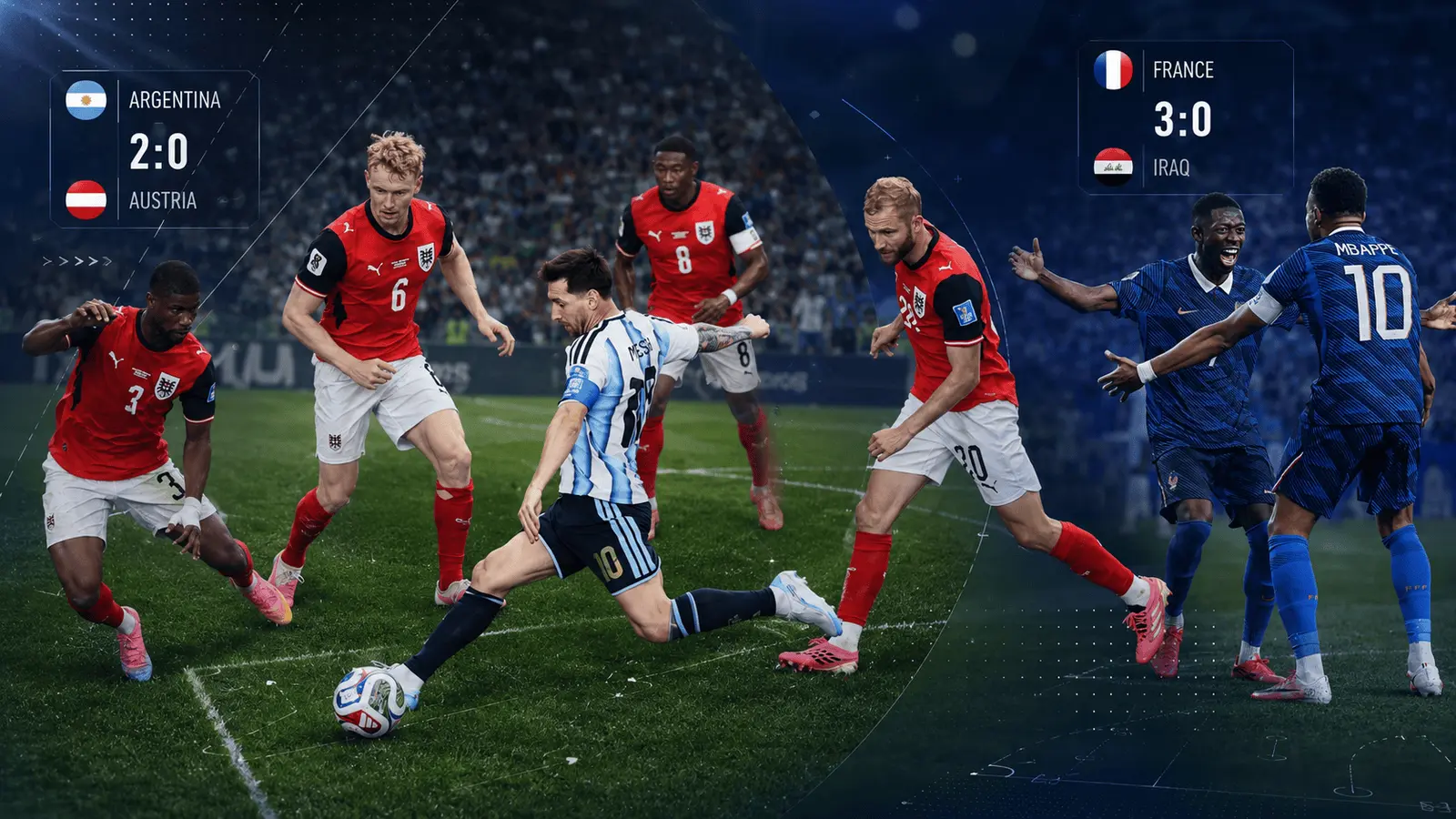
Introduction
A World Cup group-stage analysis package built around one central question: when a national team leans on a superstar, does the structure amplify him or narrow the team? Argentina’s use of Lionel Messi looks like a mature team project; Norway’s reliance on Erling Haaland brings goals but also tactical risk; and the situations facing Senegal, Austria, Algeria and Jordan show how fine the margins become when systems, fitness and finishing do not fully align.
Match Preview
Group Stage Pressure Points: Senegal Must Chase, Algeria Must Speed Up, Argentina Must Protect the Messi Chain
The group stage is becoming a test of structure, not just star power
The 2026 FIFA World Cup format — 12 groups of four, with the top two in each group and the eight best third-placed teams advancing — has created a familiar but sharper kind of pressure. A team can still be alive after a poor start, but goal difference, late-game endurance and tactical flexibility quickly become decisive.
That is why the next set of fixtures around Senegal, Algeria, Austria and Argentina should be read through more than the table. These are not just matches to be won; they are tests of whether each team’s football can hold up under tournament pressure.
Senegal vs Iraq: winning may not be enough
Senegal enter the final group match against Iraq with no margin for softness. After losing 0-3 to France and then 2-3 to Norway, Senegal sit on zero points with a negative goal difference. In a tournament where many third-placed sides may reach four points, Senegal’s route is narrow: they must beat Iraq, and they likely need to do it convincingly.
That creates a tactical trap. Senegal have enough attacking quality to hurt opponents — Ismaïla Sarr’s performance against Norway underlined that they are not short of threat — but they have also paid for small defensive mistakes. The more aggressively they chase goals, the more exposed those mistakes become.
The key question is whether Senegal can attack with urgency without turning the match into a reckless transition game. If Iraq score first, Senegal could be forced into an even more open contest, where every missed chance and every defensive lapse affects not only the result but the wider third-place comparison.
Algeria vs Austria: result pressure meets pressing pressure
Algeria’s 2-1 win over Jordan kept them alive, but it did not erase the concerns. The performance was slow, the attacking rhythm was uneven, and Riyad Mahrez no longer looks like the single-player solution he once was for Algeria. At 35, with a modest attacking footprint against Jordan, Mahrez remains important — but the team can no longer expect him to carry every possession into danger.
Austria present a very different problem from Jordan. Ralf Rangnick’s side are built around high pressing, compact aggression and practical tournament football. They lost 2-0 to Argentina, but their structure made the match uncomfortable, and David Alaba’s defensive contribution was a reminder that Austria are not a soft opponent even when beaten.
For Algeria, the preview is simple: if they circulate the ball slowly against Austria, they invite pressure. If they cannot play through or around the press with more speed, the match could become a long exercise in turnovers and recovery runs. Austria’s own issue is finishing quality, particularly around the centre-forward role, but their pressing game is capable of creating enough territory to make Algeria suffer.
Argentina’s next test: sustaining the Messi project
Argentina have opened with control: 3-0 against Algeria and 2-0 against Austria. Lionel Messi has scored all five of their goals across the first two matches, including both against Austria at 38 minutes and 90+5.
That sounds like individual dominance, and it is. But it is also a structural question. Argentina are not merely throwing the ball to Messi and hoping. The team have built a protective ecosystem around him: midfield coverage, selective pressing, runners who open lanes, and attackers willing to make the extra action so Messi can spend his energy in the highest-value zones.
The concern is the same as the strength. If Rodrigo De Paul’s physical level drops, if Julián Álvarez remains inefficient in front of goal, or if the absence of Ángel Di María leaves the wide structure too narrow, Argentina could become easier to target. Maximising Messi is not the problem. Failing to maintain the chain around him would be.
What to watch
Senegal must balance desperation with defensive control. Algeria must raise the tempo against Austria’s press. Austria must turn pressure into clearer chances. Argentina must keep Messi decisive without asking the same supporting cast to absorb unsustainable physical costs.
That is the real story of this stage of the World Cup. The stars will dominate the headlines, but the teams that survive will be the ones that make their stars part of a working system.
Post-Match Review
Messi Decides, Haaland Delivers, Algeria Survive: What the Latest World Cup Results Really Told Us
Three results, one bigger theme
Argentina beat Austria 2-0. Norway beat Senegal 3-2. Algeria beat Jordan 2-1. On the surface, those are three separate World Cup group-stage results. Together, they tell a more interesting story about how teams use talent — and what happens when the system either elevates or exposes that talent.
Lionel Messi and Erling Haaland both shaped matches in obvious ways. Messi scored both Argentina goals against Austria, at 38 minutes and deep into stoppage time. Haaland scored twice for Norway against Senegal. But the difference between Argentina and Norway is important: Argentina look like a team designed to maximise Messi through collective agreement, while Norway still risk looking like a team that see Haaland and instinctively search for him.
Argentina 2-0 Austria: Messi’s goals, Argentina’s project
Argentina’s win over Austria was not a chaotic superstar rescue act. They had 12 shots, five on target; Messi alone had seven shots, four on target. The numbers reflect his centrality, but they do not fully explain why that centrality works.
Argentina give Messi freedom because the rest of the side accepts the cost. De Paul covers. The midfield adjusts. Wide players and forwards make runs that clear space rather than demand the ball. Lisandro Martínez, Thiago Almada and Julián Álvarez were all part of the attacking chain that showed how Argentina’s structure creates the final platform for Messi.
That is why the phrase “Messi project” fits. This is not passive dependence. It is an active team plan.
Austria still deserve credit. Rangnick’s high-pressing identity made them awkward, and Alaba’s defensive work helped prevent the scoreline from stretching further. His six defensive interventions and two duels won matter because they tell the story of a defender holding together difficult phases after returning from injury.
Austria’s weakness was at the other end. Marko Arnautovic, playing behind the centre-forward, had only two touches, while Michael Gregoritsch, used as the central striker, had 26 touches but only one shot. The system could compete; the finishing platform could not.
Norway 3-2 Senegal: Haaland wins it, but the warning remains
Haaland’s two goals against Senegal underline his tournament form. Norway’s first game, a 4-1 win over Iraq, had already suggested they could carry real attacking threat. Beating Senegal 3-2 strengthens that case.
But the performance also raised a tactical warning. Martin Ødegaard provided creative quality, including an assist, yet there were moments where Norway seemed too eager to find Haaland even when other passes were available. That is understandable — when a striker is in that kind of form, the obvious option often looks like the best option — but it can also narrow a team.
Against stronger opponents, the question will be whether Norway can create a second route to goal when Haaland is crowded out. His brilliance may win group-stage matches. Tournament runs usually require more layers.
Senegal, meanwhile, are better than their position suggests. Ismaïla Sarr’s display was strong enough to stand beside the headline performers in the match. But Senegal’s issue is not a lack of quality; it is the cost of small errors. With zero points and a poor goal-difference position, their final match against Iraq now becomes a chase.
Algeria 2-1 Jordan: the win that did not convince
Algeria’s 2-1 win over Jordan was valuable, especially after Jordan had taken the lead. But the performance should not be dressed up as a complete answer.
The tempo was too slow for long spells, the team circulation lacked sharpness, and Mahrez no longer looks capable of dragging Algeria through games by force of personality. That is not an insult; it is the natural arc of a great player ageing. The issue is whether Algeria have built enough collective rhythm around him.
Jordan, for their part, showed organisation and progress. The problem came later in the match. For the second time in two games, they faded physically in the later stages, reinforcing the gap between good preparation and sustaining elite intensity for 90 minutes.
The lesson
Argentina, Norway and Algeria all have headline names. Only Argentina currently look as if the superstar role is fully integrated into the team’s wider identity. Norway have Haaland’s firepower, but must avoid becoming predictable. Algeria have experience, but need more tempo and collective force.
That is the difference between winning a match and looking built to survive a tournament.
Team Analysis
The Superstar System: Why Argentina Look Cohesive While Norway Still Look Vulnerable
Not all superstar teams are built the same way
Every World Cup produces teams that lean on elite individuals. The important question is not whether a team depends on a star. Almost every serious team does, in some form. The better question is whether that dependence has become a working structure.
Argentina and Norway offer two contrasting answers.
Argentina’s relationship with Lionel Messi looks mature, deliberate and reciprocal. Norway’s relationship with Erling Haaland is productive and dangerous, but it can still drift toward direct dependency. Both approaches can win matches. Only one currently looks fully balanced.
Argentina: a project, not a panic button
Argentina’s 2-0 win over Austria made Messi’s influence impossible to miss. He scored both goals and has scored all five of Argentina’s goals across their first two matches, following the 3-0 win over Algeria. Yet reducing Argentina to “Messi saves them again” misses the point.
The side are built to protect his energy and magnify his actions. Messi is not asked to spend too much time doing low-value defensive labour. Instead, teammates absorb the running, duels and spacing responsibilities that let him arrive in decisive zones.
That requires trust. De Paul’s role on the right side is not glamorous, but his coverage and emotional connection with Messi remain part of the team’s balance. Enzo Fernández and Alexis Mac Allister provide technical security and midfield control. Thiago Almada’s wide role and Julián Álvarez’s movement give Argentina ways to create lanes even when Messi is the expected finisher.
This is the difference between a team serving a star blindly and a team making intelligent collective choices. Argentina do not just look for Messi; they build situations in which Messi is the best answer.
The hidden risk in Argentina’s strength
The same structure that makes Argentina dangerous also creates pressure points.
With Ángel Di María retired from the tournament picture, Argentina’s wide threat is different. Thiago Almada on the left and Rodrigo De Paul on the right give the team work rate and tactical discipline, but the natural wing dynamism of earlier Argentina versions is not identical. That shifts more responsibility onto midfielders to stretch the pitch, combine wide and then recover central protection.
De Paul’s substitution at 82 minutes against Austria matters in this context. If his running capacity or sharpness dips, the protective layer around Messi becomes thinner. If Álvarez does not convert enough of his own chances, Argentina’s attack can become too concentrated around Messi’s finishing.
None of this cancels the brilliance. It explains the cost of sustaining it.
Norway: Haaland as solution and temptation
Norway’s 3-2 win over Senegal was powered by Haaland’s two goals. He gives Norway a level of penalty-box threat that changes every opponent’s defensive behaviour. He can also create goals that do not seem to exist when the move begins.
That is the positive side of a superstar striker.
The risk is that Norway’s attacking choices can become too obvious. Ødegaard is capable of controlling tempo and finding varied passing lanes, yet there were phases against Senegal where the instinct to search for Haaland appeared stronger than the patience to choose the best available option.
That may work when Haaland is finishing at this level. But later in the tournament, against sides with stronger centre-backs, better cover shadows and more disciplined rest defence, Norway will need more than the first look toward their No. 9.
Austria and Algeria show the other side of the equation
Austria are a useful contrast because their identity is not built around a superstar forward. Rangnick’s pressing gives them structure and bite, and Alaba’s defensive value against Argentina showed how a non-scoring player can shape a match. Their issue is the final link: pressure and territory must become goals.
Algeria have the opposite problem. Mahrez still carries name value, but the team can no longer assume he will solve slow possession by himself. Against Austria, Algeria’s collective speed will matter more than reputation.
The tournament lesson
Stars win matches. Structures win runs.
Argentina are closest to the ideal: a team that gives its genius freedom without losing collective responsibility. Norway are thrilling, but must develop more routes around Haaland. Austria have a system that needs a sharper edge. Algeria have experience but need tempo.
That is why the group stage is already separating teams with famous players from teams with complete football.
Player Performance
Messi, Haaland, Alaba and Mahrez: Four Performances That Explain the World Cup’s Early Pattern
Lionel Messi: still decisive, but now managed like a tournament resource
Messi’s two goals in Argentina’s 2-0 win over Austria were the obvious headline. The first came in the 38th minute, the second in stoppage time at 90+5. Across Argentina’s first two matches, he has scored all five of their goals.
That is extraordinary, but the more important point is how Argentina are using him.
Messi is no longer a player to be judged by how much ground he covers for its own sake. Argentina are treating his energy as a premium resource. They want him in zones where one touch, one manipulation of space or one finish can decide the match. That means others must run, protect and adjust around him.
His seven shots, four on target, against Austria show both dominance and concentration. Argentina are getting him the ball in scoring zones. The tactical question is whether they can maintain that supply line without making the attack too predictable.
Erling Haaland: Norway’s match-winner and tactical magnet
Haaland’s two goals in Norway’s 3-2 victory over Senegal confirmed his form. For Norway, he is more than a penalty-box finisher. In the national-team context, he can appear freer than he often does at club level, where the structure around him can make his role look more specialised.
That difference should not be overstated as a simple criticism of Manchester City or Pep Guardiola. It is more accurate to say that different systems ask different things of Haaland. Norway need him to be a match-winner in broader situations; City often optimise him as the final action in a highly controlled attacking machine.
The danger for Norway is gravitational. Haaland attracts the ball, the defenders and the attention of his own teammates. If every promising attack becomes a search for him, opponents will eventually load the central lane and force others to prove they can decide games.
David Alaba: the value of a defender in a match defined by Messi
Alaba’s performance against Argentina deserves attention precisely because it came in defeat. He made six defensive interventions and won two duels, helping Austria keep the match within reach for long periods.
That matters. Football coverage often treats defenders as background figures unless they make a mistake. Alaba was the opposite: a stabilising presence against a team whose best player was in clinical form.
His recent return from injury adds another layer to the performance. Austria did not lose because they lacked organisation or defensive pride. They lost because their final-third threat did not match the resistance they produced behind the ball.
Riyad Mahrez: a great player facing a different phase
Mahrez’s performance in Algeria’s 2-1 win over Jordan was a reminder that reputation and current influence are not the same thing. At 35, with 25 touches and one shot in the match, he no longer looks like the player who can carry Algeria single-handedly through a tournament.
That should be framed with respect. Mahrez has been one of the great African attacking players of his generation. But Algeria’s next step cannot be built on waiting for the old version to reappear. They need faster circulation, more collective running and more consistent support around him.
The pattern
Messi is still being elevated by a system that knows exactly what it wants from him. Haaland is winning matches but forcing Norway to answer questions about variety. Alaba showed that elite defensive performances can live inside a defeat. Mahrez showed how difficult it is for ageing stars when the team structure around them is not quick enough.
Four players, four different lessons — and one reminder that tournaments are never only about who has the biggest name.
Controversy and Talking Points
Are Superstar Teams Smart or Overdependent? Messi, Haaland and the Line Between Structure and Obsession
The debate is not “star power or team football”
Football arguments around Lionel Messi, Erling Haaland, Cristiano Ronaldo and Kylian Mbappé often become too tribal too quickly. One player is praised, another is diminished, and the actual football disappears.
The better debate is more useful: how should a team build around a superstar without becoming trapped by him?
Argentina and Norway give us two live case studies.
Argentina’s Messi plan looks like structure, not surrender
Argentina clearly play through Messi. That is not in dispute. He scored both goals against Austria and all five of Argentina’s goals across the first two group matches.
The question is whether this is unhealthy dependence. At the moment, the answer is more complicated than the raw goal distribution suggests.
Argentina’s plan has layers. They manage Messi’s defensive load. They use midfielders to protect the spaces around him. Teammates make runs that create lanes rather than simply demanding possession. When the move reaches Messi, it often feels like the final step of a collective process, not a desperate escape route.
That is why building around Messi can still look like team football. The star is central, but the structure is active.
Norway’s Haaland question is different
Norway’s use of Haaland is not wrong. When a striker is scoring twice in a 3-2 World Cup win, feeding him is rational. The controversy is whether the first instinct becomes too automatic.
There were moments against Senegal when Norway appeared drawn toward Haaland even when other passing options existed. That can be defended as common sense: find the elite finisher. It can also be criticised as tactical narrowing.
Both views can be true. Haaland is so dangerous that he makes simple football look logical. But if Norway want to go deep, they need opponents to fear the second pass, the third runner and the alternative finisher too.
The Manchester City comparison should be handled carefully
One of the more interesting arguments is that Haaland sometimes looks freer for Norway than he does for Manchester City. In Norway’s shirt, he can show more of the striker who manufactures chances from imperfect situations. At City, his role is often more refined: attack the box, finish elite service, become the endpoint of a controlled machine.
That does not mean City “limit” him in a simplistic way. It means systems optimise different qualities. City optimise efficiency. Norway need broader impact. The debate is not about blame; it is about trade-offs.
The anti-fan-war point
Messi vs Ronaldo, Messi vs Maradona, Haaland vs Mbappé — these comparisons will always attract attention. But serious football analysis should compare roles, systems, physical load, teammates and tactical context. It should not turn elite players into weapons for online point-scoring.
Messi’s Argentina show what happens when a national team and a genius age together intelligently. Haaland’s Norway show the thrill and risk of possessing a forward who bends every attack toward himself. Both are compelling. Neither needs a caricature.
The line between smart structure and overdependence is not whether a team uses its star. It is whether the rest of the team still has a footballing identity when the star is marked, tired or denied the obvious route.