
World Cup Group Stage Analysis: Portugal Rebound, England Stumble and Croatia’s Warning Signal
Introduction
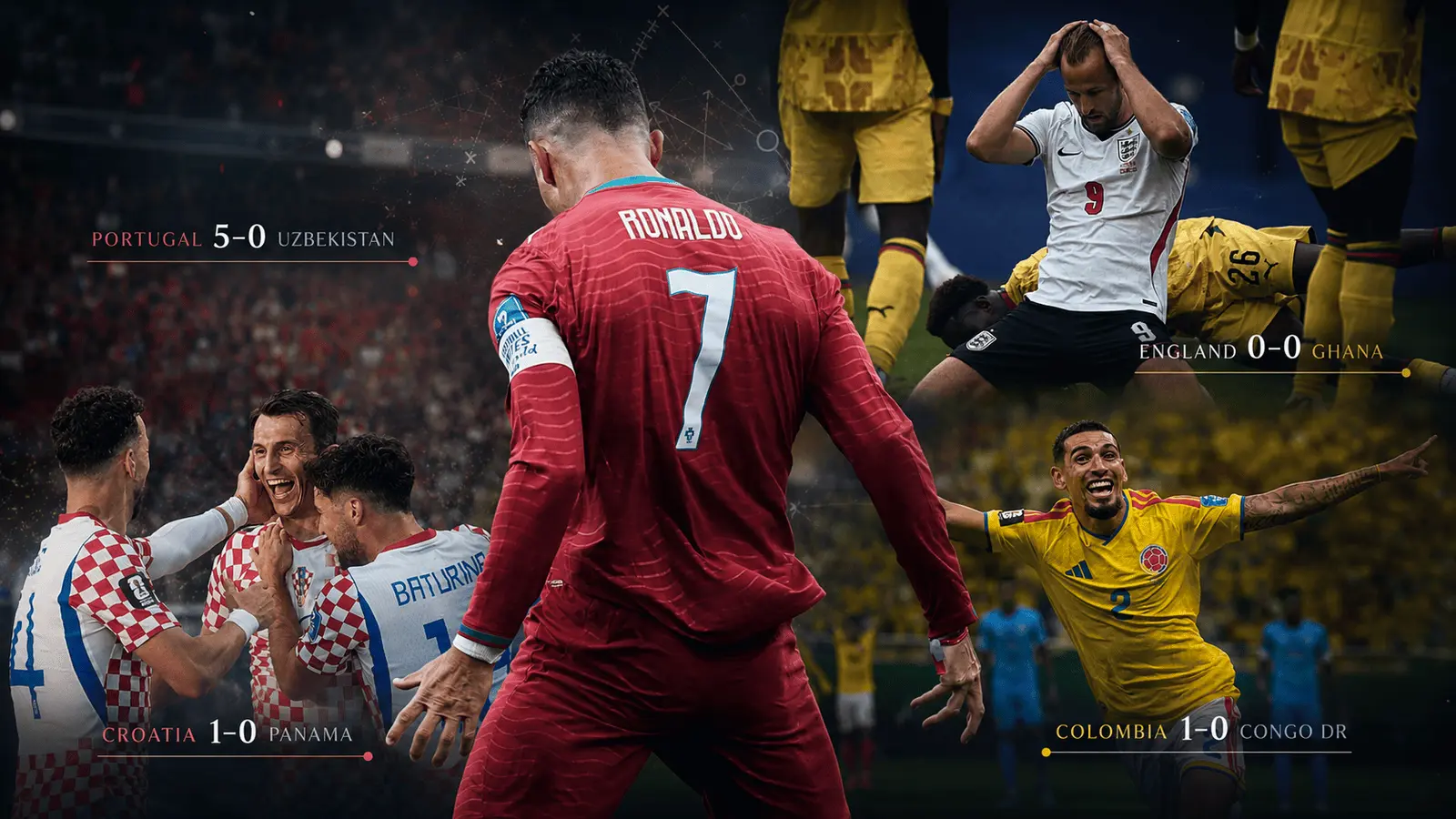
A World Cup group-stage analysis package built around the idea that scorelines alone are misleading: Portugal’s rebound was about structure as much as Cristiano Ronaldo, England’s goalless draw owed plenty to Ghana’s defensive intelligence, Croatia’s win still exposed ageing concerns, and Colombia’s narrow victory showed that low-scoring football can still be high quality.
Match Preview
World Cup Final Round Preview: When Qualification Maths Changes the Football
The final round of a World Cup group stage is where football changes shape. The first two rounds are about establishing identity; the last one is about calculation. Teams no longer play only against the opponent in front of them. They play against the table, goal difference, fatigue, possible knockout routes and the pressure of knowing that one mistake can rewrite an entire tournament.
That is why the coming fixtures should be read with more care than a normal matchday. Some teams will need to chase. Others will need to manage. Some coaches will be tempted to rotate; others will feel they cannot afford to disturb rhythm.
Portugal vs Colombia: rhythm, status and control
Portugal’s emphatic response against Uzbekistan changed the mood around Roberto Martínez’s side. The obvious headline was Cristiano Ronaldo scoring twice, but the more important question for the next game is whether Portugal can repeat the structural improvement: quicker circulation, clearer midfield responsibilities and more direct use of the flanks.
Colombia arrive from a different emotional place. A narrow win over DR Congo was not necessarily a sign of attacking limitation; it was a match of pressure, resistance and goalkeeping quality. With Colombia already in a strong qualification position after two wins, their final-round approach may depend on how much they value first place, rhythm and squad freshness.
The key question: does Portugal keep the same aggressive tempo, with Vitinha central to the rhythm, or does the match become more controlled because both sides have something to protect?
Croatia vs Ghana: experience against athletic discipline
Croatia’s win over Panama brought relief, but not total reassurance. The result mattered; the process still raised questions. Croatia remain technically secure and emotionally experienced, yet the physical cost of relying on an ageing core is increasingly difficult to ignore.
Ghana, meanwhile, showed against England that they can execute a low-possession game plan without looking passive. Their draw was built on compact defending, physical duels and midfield discipline, with Thomas Partey’s role against Jude Bellingham standing out as a major tactical factor.
Against Croatia, Ghana’s challenge will be different. They may not face the same type of English territorial dominance, but they can still test Croatia’s legs, transitions and ability to defend repeated pressure late in games. For Croatia, managing Luka Modrić’s minutes and influence is no longer just a sentimental issue. It is a competitive decision.
DR Congo vs Uzbekistan: from resistance to urgency
DR Congo have already shown they can make stronger opponents uncomfortable. Holding Portugal earlier in the group and then pushing Colombia in a narrow defeat suggests a team with defensive substance and resilience.
But the final round demands more than resilience. If DR Congo need a win to keep qualification hopes alive, they must turn defensive credibility into attacking efficiency. That is a very different game state.
Uzbekistan’s challenge is identity. Against Portugal, they were criticised for looking too passive and for moving away from the bolder, front-foot approach associated with their qualifying campaign. If they are already out of contention, pride and performance identity become the main storylines.
France vs Norway: first place under unusual pressure
France and Norway’s meeting for top spot adds another layer of intrigue. With both sides level on points and France ahead on goal difference, this is not simply a heavyweight fixture. It is a match about knockout positioning and control.
France also face an unusual off-field variable, with Didier Deschamps expected to miss the match following the death of his mother. That does not automatically change France’s tactical quality, but it can affect preparation, communication and emotional tone.
What to watch across the final round
The most important theme is not just who qualifies. It is how teams behave when the table starts shaping their decisions.
A team protecting a draw may defend deeper than usual. A team chasing goal difference may attack earlier and risk more space behind. A team already safe may rotate, which can either refresh the squad or disrupt rhythm. And in a tournament format where third-place calculations matter, the final ten minutes of matches can become as much about mathematics as football.
That is what makes this stage compelling. The best sides do not merely play well. They understand the tournament.
Post-Match Review
Why the Scorelines Lied: Portugal, England, Croatia and Colombia All Told Different Stories
A World Cup group stage can be deceptive. One team wins comfortably and appears fixed. Another draws and is labelled broken. A narrow victory is dismissed as ordinary. But football rarely explains itself that neatly.
The latest set of matches offered a useful reminder: results matter, but process tells us what might happen next.
Portugal 5-0 Uzbekistan: more than a Ronaldo response
Portugal’s 5-0 win over Uzbekistan will naturally be remembered as a Cristiano Ronaldo night. He scored twice, answered some of the noise around him and remained central to the emotional gravity of the team.
But the more important story was Portugal’s structure. The attack looked faster and cleaner. Vitinha’s influence in midfield gave the side a clearer tempo. The wide play was more direct, and the team created a better supply line into dangerous areas rather than relying on slow, crowded possession.
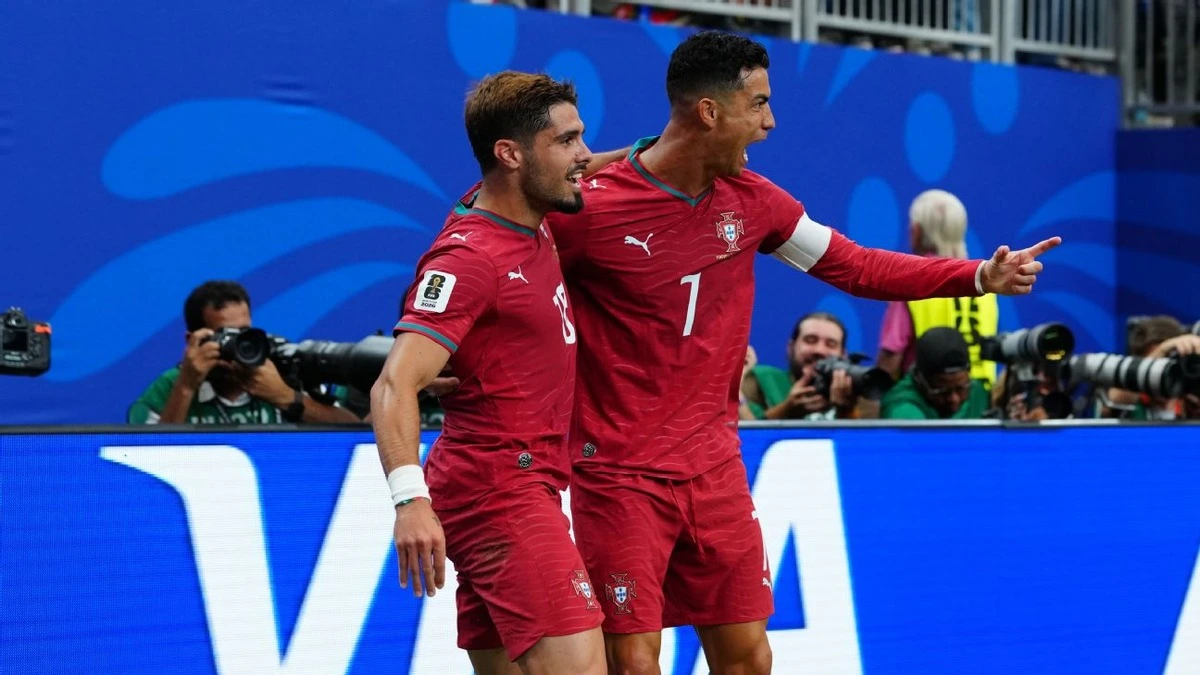
Ronaldo still matters most when Portugal create the right kind of chances for him: lower-touch, high-value moments inside or near the box. Asking him to play as if he is still a full-pitch force is not realistic. Building a faster, more direct team around his finishing instincts is far more sustainable.
England 0-0 Ghana: frustration, but not a one-team story
England’s goalless draw with Ghana will invite criticism, and some of it is fair. England had territorial control, plenty of the ball and enough attacking talent to expect more. Harry Kane’s late chance after England hit the bar will be replayed because elite strikers are judged by moments like that.
Yet this was not simply England failing. Ghana defended extremely well. Their plan was coherent: accept low possession, protect central areas, compete physically and break only when the risk made sense. Thomas Partey’s presence in midfield helped disrupt Jude Bellingham’s rhythm, and Ghana’s defensive discipline made England’s possession feel increasingly sterile.
The real question for England is whether this was an off night in the final third or a deeper warning about breaking down compact, physical opponents.
Croatia 1-0 Panama: victory with a warning attached
Croatia did what they had to do against Panama, but the performance did not entirely calm concerns. The second-half changes helped them regain control, yet the fact that the game remained uncomfortable against a weaker opponent matters.
Luka Modrić reaching his 200th international appearance is an extraordinary milestone. It is also symbolic. Croatia’s greatness has been built around experience, technical calm and midfield intelligence. But the same experience now raises the obvious question: how long can this core keep managing high-intensity tournament football?
A win can protect a campaign. It does not always remove the underlying problem.
Colombia 1-0 DR Congo: low scoring does not mean low quality
Colombia’s 1-0 win over DR Congo should not be filed away as a flat result. Colombia produced sustained pressure, while DR Congo stayed alive through defensive structure and strong goalkeeping.
The shot profile told the story of a match that had more action than the scoreline suggested: Colombia forced the issue, DR Congo resisted, and the game remained tense because the margin never grew.
That is tournament football at its best: not always explosive, but tactically alive from start to finish.
The bigger lesson
Portugal’s win suggested improvement. England’s draw exposed a question. Croatia’s victory came with concern. Colombia’s narrow success showed control without comfort.
The scoreboard gave four results. The performances gave four very different forecasts.
Team Analysis
Portugal Found Clarity, England Found a Problem and Croatia Found a Warning
The most revealing tournament matches are not always the biggest wins or the most dramatic finishes. Sometimes they are the games that show whether a team’s idea is sustainable.
Portugal, England and Croatia all left their latest matches with something to think about. One looked sharper. One looked frustrated. One won but still looked vulnerable.
Portugal: simplicity made them better
Portugal’s improvement was not mysterious. They played quicker, simplified the midfield picture and used the flanks more directly.
The key was Vitinha. When he becomes the tempo-setter, Portugal look less crowded in central areas and more purposeful in progression. His ability to receive, turn, pass early and keep the ball moving changes the whole rhythm of the side.
The Bruno Fernandes question should not be framed as a matter of quality. Fernandes is an elite creative player. The issue is functional balance. If too many players want to dictate the final pass and too few stretch the pitch or attack space, Portugal can become slow and over-elaborate. Against Uzbekistan, the balance looked cleaner.
Cristiano Ronaldo then benefits from that clarity. At this stage of his career, Portugal do not need him to dominate every phase. They need him to finish moves, manipulate defenders with movement and remain decisive in the box.
England: possession is not penetration
England’s 0-0 draw with Ghana was a familiar kind of warning. The ball was not the problem. The conversion of possession into high-quality, repeatable danger was.
Ghana’s low block was not aimless survival football. It was organised, physically committed and strategically honest. They did not pretend to control the ball. They controlled space.
That is precisely the kind of opponent England must solve if they want to go deep. Against compact defences, simply adding another technical player is not always enough. The issue is spacing, timing, box occupation, second-ball pressure and whether the central creators can receive facing forward.
Jude Bellingham being made uncomfortable by Thomas Partey mattered because England’s best attacking patterns often need him to connect midfield and attack. When that link is disrupted, England can look wide, slow and predictable.
Croatia: experience is both strength and risk
Croatia remain one of international football’s great examples of tournament intelligence. They rarely panic. They understand tempo. They know how to survive awkward matches.
But the Panama win underlined the other side of that identity. The core is older, and the team’s control does not feel as inevitable as it once did. Modrić’s 200th cap was a landmark worthy of admiration, but it also sharpened the question of succession.
Croatia’s problem is not simply replacing a player. It is replacing a rhythm, a decision-making structure and a way of calming matches that has defined them for years.
Ghana and Colombia deserve more respect
The broader lesson is that the so-called supporting cast in this group-stage discussion should not be dismissed.
Ghana’s draw with England was earned through discipline and physical intelligence. Colombia’s win over DR Congo showed sustained attacking pressure. DR Congo’s resistance showed defensive substance. These are not background teams in someone else’s story; they are shaping the tournament’s tactical landscape.
As the final group games arrive, the teams with the clearest identities may be better placed than the teams with the biggest names.
Player Performance
Vitinha, Ronaldo, Partey and Modrić: Four Players Who Defined the Round in Different Ways
International tournaments are often remembered through goals, but the most important individual performances are not always measured only by the final touch.
This round offered four very different player stories: Vitinha as Portugal’s rhythm engine, Cristiano Ronaldo as a late-career finisher still capable of changing the mood, Thomas Partey as Ghana’s stabiliser, and Luka Modrić as both legend and warning sign for Croatia.
Vitinha: Portugal’s tempo switch
Portugal looked better when Vitinha looked central. That is not a coincidence.
His value is not just passing volume. It is the speed of decisions. He receives under pressure, turns play forward, presses after losing the ball and gives Portugal a cleaner first connection from midfield into attack.
When Portugal slow down, they can become a team of talented passers standing in similar zones. When Vitinha accelerates the rhythm, the structure breathes. The ball reaches the wide players earlier. The forwards receive before the defence is set. Ronaldo gets chances that suit the player he is now.
Cristiano Ronaldo: still elite, but in a different way
Ronaldo’s two goals against Uzbekistan were important, but the wider lesson is about role definition.
He is no longer the all-action forward of his physical peak, and judging him by that standard is pointless. His current value is in movement, penalty-box timing, aerial threat, defensive attention and finishing instinct.
Portugal’s job is not to ask Ronaldo to be young again. It is to build enough speed and width around him so that his best remaining qualities are amplified rather than exposed.
Thomas Partey: the quiet reason Ghana frustrated England
Ghana’s draw with England was built on collective discipline, but Partey’s role was central. His presence gave Ghana strength in midfield duels and helped limit Jude Bellingham’s ability to dominate the connecting spaces.
That matters because Bellingham is not just another attacking midfielder for England. He is a carrier, connector and penalty-area threat. If an opponent can make his touches less comfortable, England’s attack becomes easier to contain.
Partey’s performance was a reminder that defensive midfield play can decide a match even without a headline moment.
Luka Modrić: a milestone and a mirror
Modrić’s 200th international appearance is a remarkable achievement. Few players have combined longevity, elegance and competitive authority at that level.
But the milestone also reflects Croatia’s dilemma. Modrić remains valuable because his intelligence is still elite. Yet Croatia’s reliance on him also raises questions about tempo, pressing resistance and how the team transitions into its next era.
The issue is not whether Modrić deserves reverence. He does. The issue is how Croatia manage the gap between what he still offers and what tournament football increasingly demands physically.
Different players, different meanings
Vitinha showed how a midfielder can reorganise a team’s rhythm. Ronaldo showed how a superstar can still matter through role clarity. Partey showed how disruption can be as decisive as creation. Modrić showed how greatness can become both an asset and a strategic question.
That is the beauty of tournament football: one round can reveal four very different kinds of influence.
Controversy and Talking Points
The Ronaldo Debate Is Too Narrow: Portugal’s Real Question Is Balance
Every Portugal match eventually becomes a Cristiano Ronaldo referendum. If he scores, he has answered the critics. If he misses chances, he is holding the team back. If a teammate scores, cameras search for his reaction. If Bruno Fernandes gestures, it becomes a theory about dressing-room politics.
That conversation is understandable because Ronaldo is one of the defining footballers of his era. But it is also too narrow.
Portugal’s real question is not whether Ronaldo is still Ronaldo. He is not, and no 41-year-old forward should be expected to be. The real question is whether Portugal can build a team that uses what he still does exceptionally well without bending the entire structure out of shape.
Ronaldo and Messi comparisons miss the point
The Ronaldo-Messi comparison will never disappear, but the late-career version of it often lacks context.
Messi has always been closer to an on-ball organiser: a player who can control tempo, create the pass, carry the attack and finish the move. Ronaldo’s greatest late-career value is different. He is more of an off-ball finisher, a penalty-box manipulator, a player whose movement and presence change defensive behaviour.
Those are not lesser qualities. They are different qualities.
Comparing them only through goals, touches or isolated tournament moments flattens two very different forms of greatness.
The Bruno Fernandes question is tactical, not personal
The same applies to the debate around Bruno Fernandes. If Portugal look smoother with altered midfield responsibilities, that does not mean Fernandes is a problem as a player.
It means Portugal must avoid functional overlap. Too many organisers in the same spaces can slow attacks down. Too many players wanting to deliver the final ball can leave the team short of runners, width and direct threat.
Vitinha’s role matters because he gives Portugal a rhythm from deeper areas. If that rhythm is clear, Fernandes can still be valuable — but the balance around him has to be right.
Martínez deserves credit and scrutiny
Roberto Martínez should receive credit when Portugal look clearer. Tactical adjustments, tempo changes and role clarity do not happen by accident.
But the scrutiny is also fair. Portugal have enough talent that the standard cannot be occasional fluency. The question is whether Martínez can make the structure repeatable against stronger opponents, not only when the game state and matchup are favourable.
The mature view of Ronaldo
The mature view is neither worship nor dismissal.
Ronaldo can still help Portugal. He can still score. He can still drag defensive attention and give the team a ruthless box presence. But Portugal must play in a way that creates the right conditions for him.
If they do, the Ronaldo debate becomes less toxic and more tactical. If they do not, every miss, glance and substitution will become another referendum.
Portugal are better than that conversation. Their challenge is to prove it on the pitch.