
World Cup Trends: South Africa Punish Korea, Mexico Ride the Host Wave and Brazil Build Deep Matrix
Introduction
World Cup tactical and narrative coverage with a focus on why some teams turned short-tournament pressure, environment and squad identity into an advantage while others were exposed by conservative psychology, flawed preparation or structural weaknesses.
Match Preview
South Africa vs Canada Preview: Can Broos’ Low Block Survive a Knockout Test?
South Africa’s 1-0 win over South Korea did more than secure second place in Group A. It gave Hugo Broos’ side a clear identity heading into the knockout round: compact without the ball, selective in transition, and prepared to suffer for long periods if the game state demands it.
Their next confirmed assignment is Canada at SoFi Stadium in Inglewood, California — a match that should test whether South Africa’s group-stage formula can survive against an opponent no longer carrying the same home-territory advantage.
South Africa’s blueprint is clear
Against South Korea, South Africa had only 32% possession and completed far fewer passes, but the numbers did not tell a story of helpless defending. They produced 13 shots to Korea’s eight, four shots on target to Korea’s three, and generated 1.16 xG compared with Korea’s 0.90.
That balance matters. South Africa were not simply camped in their own penalty area hoping for a mistake. They identified Korea’s left-side channel as a weakness, attacked the space between wing-back, holding midfielder and left centre-back, and then protected the lead with a layered low block after Thapelo Maseko’s 63rd-minute goal.
That is the article Canada must now break.
The key tactical question
The knockout tie is likely to revolve around territory against transition. South Africa will be comfortable giving up the ball if their defensive distances remain tight. Canada, by contrast, must avoid turning possession into sterile circulation.
For Broos, the priority is familiar: keep the central lane protected, force play wide, and look for fast exits when Canada lose rest-defence balance. For Canada, the task is to move South Africa’s block side to side quickly enough to open the half-spaces before the defensive shell resets.
South Africa cannot only defend
The danger for South Africa is that a knockout match can punish passivity more brutally than a group-stage game. If Canada pin them deep for too long, clearances will become pressure invitations. South Africa need counter-attacks that do more than relieve pressure — they need counters that make Canada hesitate before committing numbers forward.
That was the difference against Korea. South Africa’s threat was real enough to make Korea uncomfortable even while Korea dominated the ball.
The emotional edge
Broos’ side also carry momentum. Their domestic calendar and limited preparation time made this run feel less inevitable than manufactured through clarity and discipline. That kind of shared belief can be powerful in tournament football, especially for teams that know exactly what they are and what they are not.
South Africa will not out-possess most opponents. They may not out-star them either. But if they defend with the same concentration and attack the right spaces at the right moments, Canada will have a serious problem.
Team Analysis
Three World Cup Lessons: Korea’s Fragility, Mexico’s Momentum and Brazil’s Depth
The final round of World Cup group matches has offered a useful contrast. Some teams are turning conditions into weapons. Others are being damaged by the very details they should have controlled.
South Africa, Mexico and Brazil have all found different forms of competitive clarity. South Korea and Czechia, by contrast, have been left answering harder questions.
Korea: structure and psychology collided
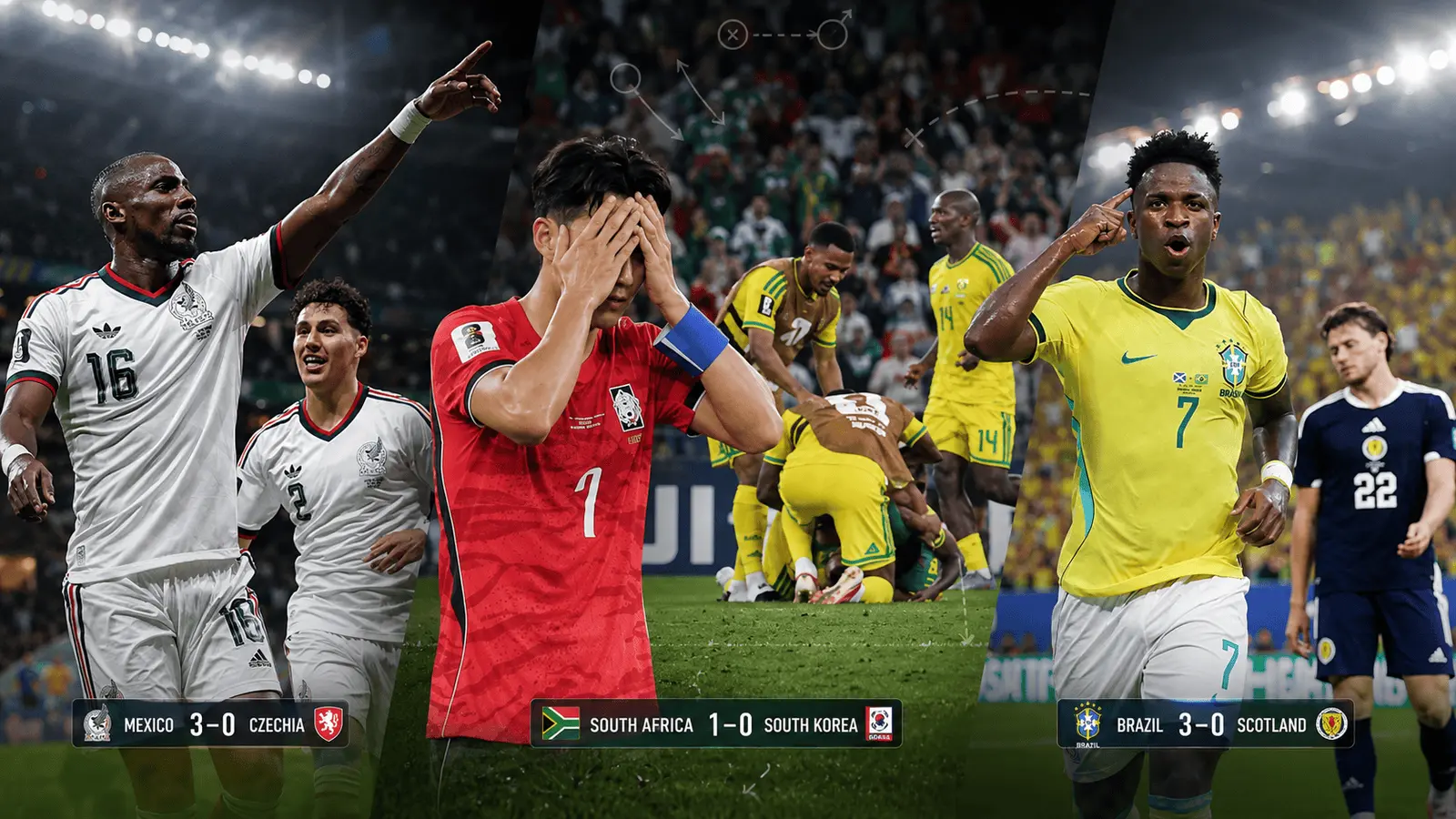
South Korea’s 0-1 defeat to South Africa was not a possession problem. It was a control problem.
Korea had 68% of the ball, but their 3-4-2-1 left the left half-space exposed often enough for South Africa to build a clear attacking plan around it. The more Korea played with a draw-is-enough mindset, the more their possession became conservative rather than assertive.
That is the trap of tournament calculation. A team can know a draw is enough without playing like a draw is the objective. Korea failed that distinction.
South Africa: discipline as a weapon
South Africa’s strength is not possession dominance. It is clarity.
Hugo Broos’ side understood where Korea were vulnerable, attacked the left-side channel, and after taking the lead, defended with numbers and layers. Their 40 clearances were not pretty, but they were part of a plan. Their 15 interceptions showed that they were not simply waiting for luck; they were reading Korea’s circulation and defending the next pass.
That kind of discipline travels well in knockout football, especially for a side comfortable without the ball.
Mexico: host energy with tactical substance
Mexico’s 3-0 win over Czechia completed a perfect nine-point group stage and secured top spot. The key point is that this is not only a crowd story.
The host advantage is real — altitude, familiarity, atmosphere, emotional energy — but Mexico have also shown a trained pressing structure. Their pressure has looked coordinated rather than reckless, giving them the capacity to turn emotion into territory and territory into chances.
The next question is whether they can solve the centre-forward issue. Santiago Gimenez’s tournament form has been a concern, and knockout matches often require a striker who can convert pressure into separation.
Guillermo Ochoa’s late substitute appearance against Czechia also mattered, even with minimal shot-stopping work required. In tournament football, symbols count. Ochoa’s sixth World Cup presence connects the current side to a longer national memory.
Czechia: preparation became a talking point
Czechia’s group-stage story has been framed not only by results but by preparation. Their base in Dallas and matches at significantly higher elevations in Guadalajara and Mexico City created an obvious question: did the travel and altitude rhythm undermine their ability to sustain pressure?
It is too simplistic to blame altitude for everything. But in a short tournament, recovery, acclimatisation and logistics are not secondary details. They shape the football before the first whistle.
Brazil: the difference depth makes
Brazil’s situation shows why elite squads remain dangerous even with problems. Raphinha’s injury is a real issue, but Brazil have options. Neymar’s return adds emotional weight and experience. Vinicius has been re-energised by a role that gives him left-side space. Bruno Guimaraes has provided defensive work and transition control across consecutive matches.
Carlo Ancelotti’s biggest contribution may be conceptual: he is not trying to over-coach Brazil’s most explosive players. He is giving them a structure that creates the space for their instincts to matter.
That is why Brazil feel different from many rivals. They do not need the tournament to be perfect. They need enough of their solutions to come online at the right time.
Player Performance
Son, Ochoa, Neymar and Vinicius: Four Player Stories Defining the World Cup Mood
World Cups are never only tactical. They are also about careers meeting pressure at the most visible possible moment. Four player stories currently stand out: Son Heung-min’s transition, Guillermo Ochoa’s symbolism, Neymar’s return and Vinicius’ resurgence.
Son Heung-min: the role is changing
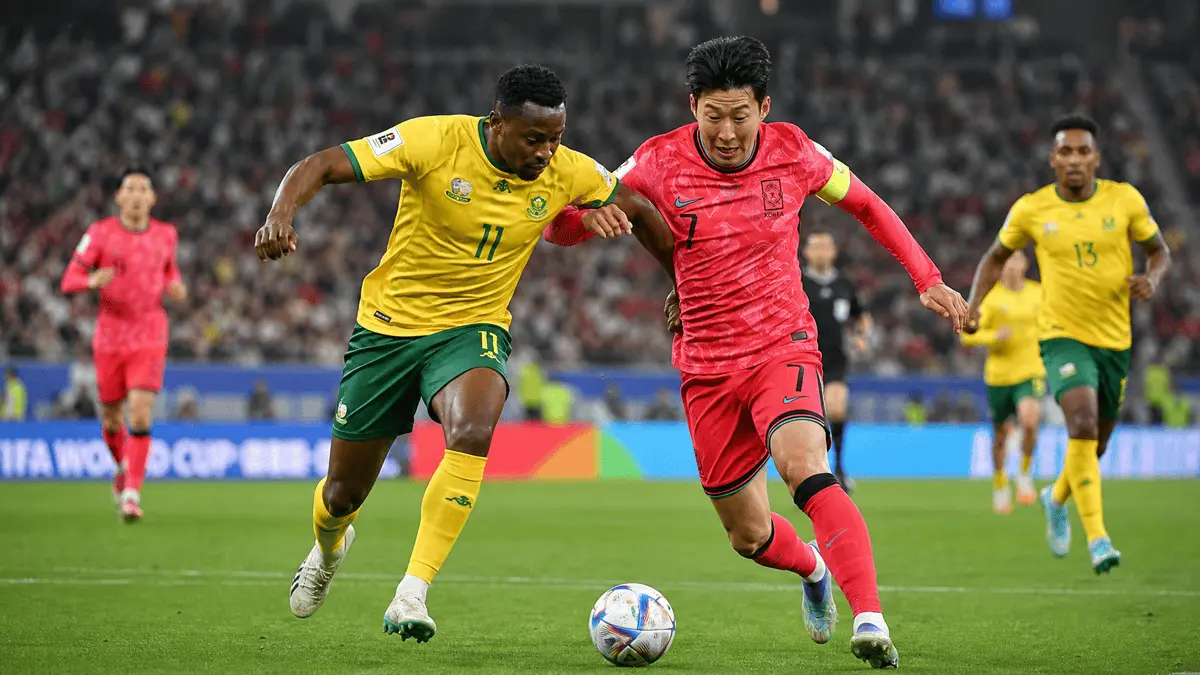
Son began South Korea’s first two group games as a central forward, playing 69 minutes against Czechia and 57 minutes against Mexico. Against South Africa, he was not in the starting XI and entered at half-time, used as a left-sided attacking midfielder behind the striker.
That shift says something. Son is still South Korea’s most recognisable attacking figure, but the team no longer look as if they can simply place him at the top of the structure and expect the attack to function around him.
The introduction of a more orthodox centre-forward can make Korea more balanced, allowing Son to attack from a second line rather than wrestle with centre-backs. But Korea’s late-game crossing against South Africa also showed the risk: if the structure around Son is not sophisticated enough, his role change becomes cosmetic rather than transformative.
Lee Kang-in: talent still needs the right ecosystem
Lee Kang-in remains one of Korea’s most technically gifted players, but his national-team future is complicated. At Paris Saint-Germain, he has collected major honours as part of a powerful squad, but he has not been the undisputed central figure. That gap matters when a national team expects him to become one of its creative pillars.
The concern is not his technique. It is whether his style can evolve quickly enough for the speed and physical demands of modern international football.
Ochoa: sometimes the moment is the performance
Guillermo Ochoa entered Mexico’s 3-0 win over Czechia in the 78th minute, after Mexico had already built a 2-0 lead. His Expected Goals Conceded figure was only 0.07, so this was not a heroic shot-stopping cameo.
It was something else: a World Cup ceremony inside a competitive match.
Ochoa’s sixth World Cup appearance places him in rare historical company and reinforces his status as a Mexican football symbol. For a host nation trying to turn emotion into momentum, those minutes mattered.
Neymar: return as emotional fuel
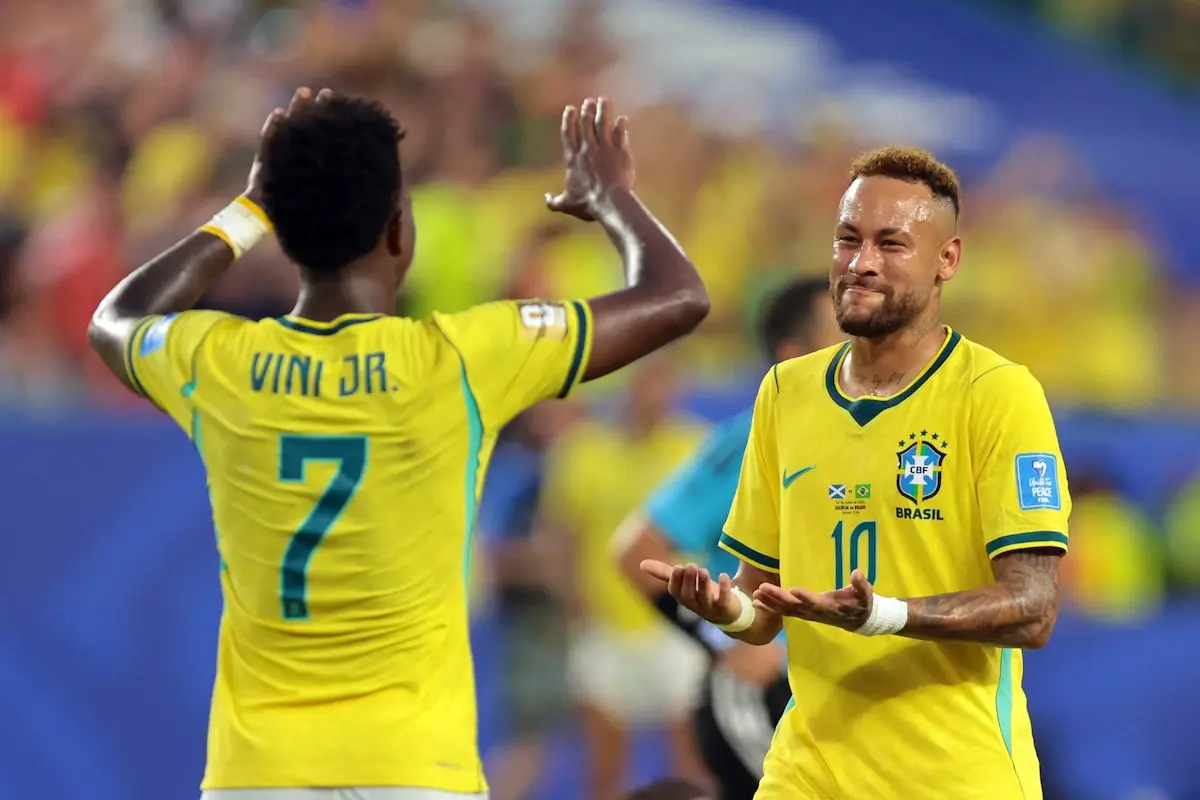
Neymar’s return to the Brazil shirt after 981 days carried a significance beyond match rhythm. The injury history, the public scrutiny and the emotional response around his comeback have turned his presence into a national-team storyline.
Brazil do not need Neymar to be the entire system anymore. That may be the healthiest version of this story. If he can contribute experience, creativity and emotional lift without carrying every attacking burden, Brazil become more layered.
Vinicius: space is the key
Vinicius’ best football comes when he has room to run, isolate defenders and attack the left channel at speed. Under Carlo Ancelotti, Brazil appear to be leaning into that truth rather than complicating it.
The idea is simple but powerful: let central players occupy defenders, create the conditions for Vinicius to receive with space, and allow him to do what few players in world football can do.
That is not tactical laziness. It is tactical respect for a player’s most destructive weapon.
Controversy and Talking Points
The Hidden World Cup Battle: Psychology, Altitude and the Cost of Bad Preparation
World Cup debates often focus on goals, substitutions and refereeing decisions. But the most interesting talking points from this group-stage phase sit deeper: psychology and preparation.
South Korea and Czechia offer two very different warnings.
Korea and the danger of “a draw is enough”
South Korea knew a draw against South Africa would be enough to finish second in Group A. The problem was not the calculation. The problem was how the calculation seemed to affect the football.
A team can understand the table without allowing the table to dictate its tempo. Korea played as if risk reduction was the same thing as control. It was not.
The result was a performance heavy on possession but light on incision. Korea’s 68% possession did not stop South Africa producing more shots, more shots on target and the winning goal. In tournament football, playing for safety can become the fastest way to lose it.
Probably time to make generation change for South Korea.
Hong Myung-bo’s uncomfortable question
Hong Myung-bo’s half-time triple change can be read two ways. On one hand, it was a necessary correction. Korea’s left side needed help, and the match demanded a reset. On the other, such a major early adjustment raised a fair question about whether the initial plan had been wrong.
That is the burden of a former great player in management. Authority earned on the pitch does not automatically become clarity from the touchline. Coaching is not only about seeing problems; it is about building a structure that prevents them from recurring.
Czechia and the altitude debate
Czechia’s campaign has also triggered a preparation debate. Their base was in Dallas, while matches in Guadalajara and Mexico City brought significantly higher-altitude conditions. That does not prove altitude caused their problems, but it does make the question legitimate.
Short-tournament football magnifies logistics. Training base, travel rhythm, recovery windows and acclimatisation are not background details. They influence pressing intensity, duel capacity and late-game decision-making.
When a team with set-piece and aerial strengths appears to fade in physically demanding conditions, the preparation discussion is unavoidable.
The broader lesson
South Africa and Mexico have shown the opposite side of the argument. South Africa turned limited possession into a clear defensive-and-transition identity. Mexico turned host conditions, crowd energy and pressing structure into a perfect group stage.
The lesson is not that every winner planned perfectly or every loser planned badly. Football is more complex than that. But the World Cup is too short to waste advantages. If psychology, environment and logistics are mishandled, they become opponents before the real opponent even touches the ball.