
PSG Retain the Champions League: Why Arsenal’s Defeat Still Points to Progress
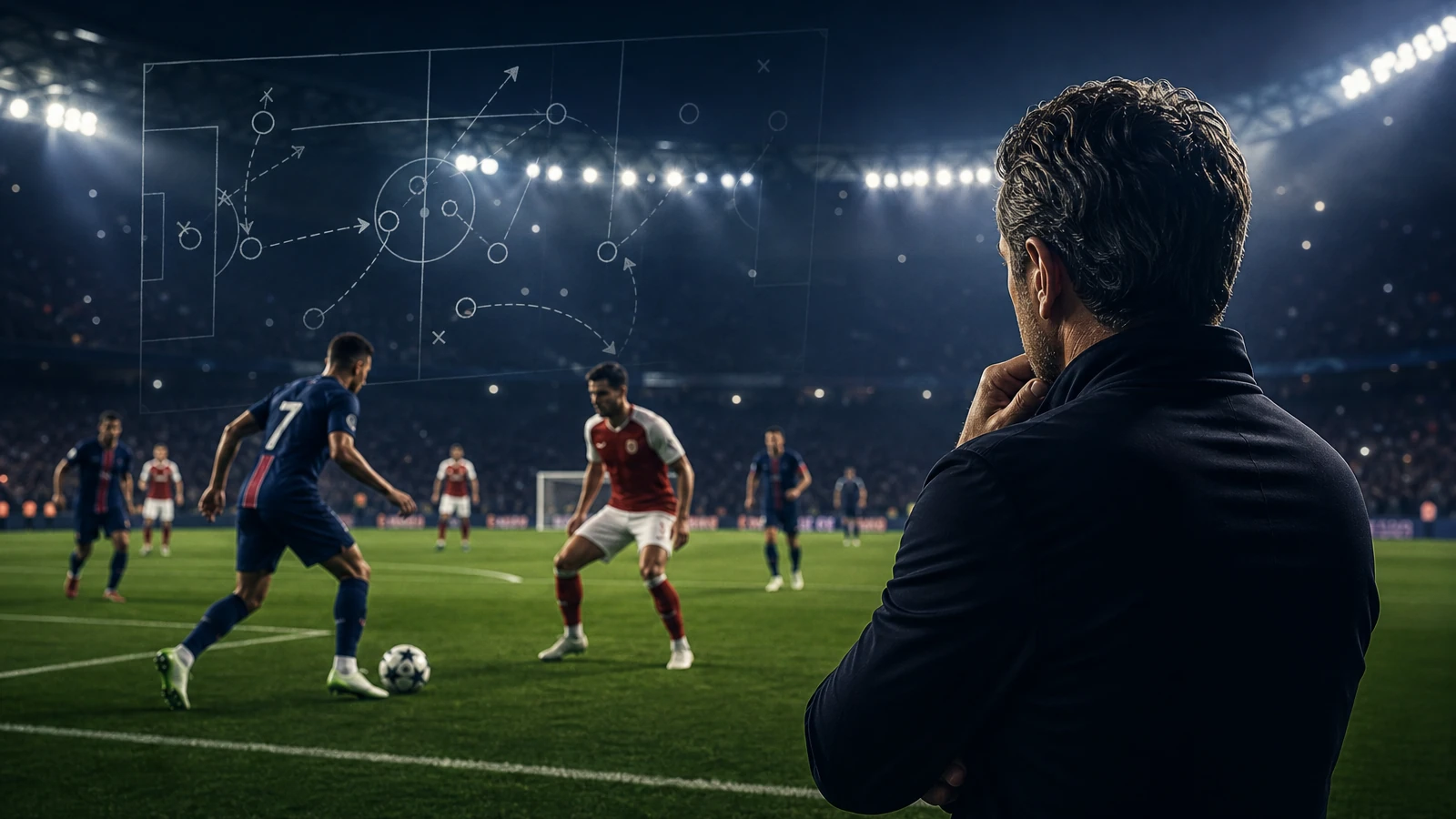
Introduction
A football analysis package built around PSG retaining the Champions League, Arsenal’s complicated but still progressive season, big-game psychology, squad-building lessons, and the broader preview themes leading into the 2026 World Cup cycle.
Match Preview
2026 World Cup Preview: Why the Next Tournament Will Test More Than Talent
2026 World Cup Preview: Why the Next Tournament Will Test More Than Talent
The next World Cup will be judged by goals, knockout drama and the usual national-team storylines. But the deeper tactical question may sit away from the pitch: which teams can manage the tournament environment best?
A 48-team World Cup spread across multiple host countries changes the rhythm of preparation. It places greater emphasis on travel recovery, sleep patterns, squad rotation, medical planning and information control. In that sense, the tournament will reward more than star power. It will reward teams that understand how to keep players sharp without overwhelming them.
That is where modern tournament football is moving. The best coaches are not only choosing formations; they are managing emotional temperature. Big matches can be lost when players are overloaded with detail, anxiety or constant reminders of the occasion. The challenge is to create urgency without panic.
Japan’s recent 1-0 friendly win over Iceland, marked by Maya Yoshida’s ceremony and Koki Ogawa’s headed goal, offers a useful reference point. The scoreline was narrow, but the broader lesson is that mature national teams are measured by process as much as outcome: control, structure, substitutions and the ability to keep pushing late in matches.
For emerging or rebuilding national teams, that standard matters. A win against a weaker opponent is no longer enough on its own. Supporters want to see repeatable patterns: pressing that works, possession that has purpose, and younger players gaining experience without the team losing its identity.
The 2026 World Cup will therefore be a tournament of two competitions. One will be visible: results, goals and elimination rounds. The other will be hidden: logistics, recovery, mental control and squad management. The teams that master both will have the best chance of surviving the expanded format.
Team Analysis
PSG and Arsenal Are Both Elite Now — But Only One Has Learned How to Finish the Job
PSG and Arsenal Are Both Elite Now — But Only One Has Learned How to Finish the Job
The most interesting comparison between Paris Saint-Germain and Arsenal is not winner against loser. It is two elite projects at slightly different stages of maturity.
PSG are no longer just a club defined by star power. Their current identity is built around pressure, mobility, younger legs and a coach who understands that big-game preparation is not only tactical. Luis Enrique’s PSG have found a way to turn intensity into control rather than chaos. That is why retaining the Champions League carries more meaning than a single shootout victory.
Arsenal, meanwhile, should resist the temptation to view the final as proof of failure. Their season included a Premier League title and a run to the Champions League final. That is a serious body of work. Arteta’s team have moved from promise to contention, and from contention to a level where they are judged by the harshest standards.
But the final also clarified what remains missing. Arsenal’s structure is strong enough to compete with Europe’s best. Their defensive organisation, pressing framework and midfield control can carry them deep into tournaments. The gap is in the last attacking layer: the ability to create and finish decisive moments when the opponent is also elite, compact and emotionally stable.
Kai Havertz delivered a major final contribution, but Arsenal could not rely on one player’s big-game instinct to solve the entire attacking problem. The next step is not just adding talent. It is adding repeatable final-third solutions under maximum pressure.
Liverpool provide a separate warning about elite-team management. Arne Slot’s dismissal, with no confirmed replacement, shows how quickly a major club can move from results to risk assessment. Links to Andoni Iraola remain an assumption rather than a confirmed succession plan, but the broader point stands: top clubs increasingly act before decline becomes fully visible.
PSG are currently the model of a project that has converted pressure into silverware. Arsenal are the model of a project that has built almost everything required, but still needs one more layer. That is not a small distinction. At the top of European football, it is often the whole difference.
Controversy and Talking Points
Did Arsenal Fail, or Did They Simply Reach the Next Standard?
Did Arsenal Fail, or Did They Simply Reach the Next Standard?
Football culture has little patience for nuance after a final. Win, and every decision looks brave. Lose, and every weakness becomes obvious. Arsenal now sit in that uncomfortable space.
They lost the Champions League final to Paris Saint-Germain on penalties after a 1-1 draw. For some supporters, that is all that matters. Finals are for winning, not for moral victories.
That argument has force. Arsenal are no longer a developing side asking to be praised for effort. They are Premier League champions and Champions League finalists. They have earned elite expectations, and elite expectations come with cruel judgement.
But calling the season a failure goes too far. Arsenal’s campaign proved that Mikel Arteta’s project has moved into the highest competitive bracket. The club are not merely close to the elite; they are part of it. The fact that a Champions League final defeat now feels devastating is itself evidence of how far the standards have moved.
The real talking point is sharper: Arsenal have built a team capable of reaching the biggest matches, but not yet one with enough final-third certainty to consistently win them. That is not a collapse. It is a diagnosis.
PSG have already crossed that threshold. They retained the Champions League because they had enough emotional control and execution to survive the final’s most pressurised moments. Arsenal showed they belong in those moments. Now they must show they can own them.
So the argument should not be whether Arsenal failed or succeeded in simple terms. The better question is whether they use this defeat as proof of a ceiling or as the final lesson before breaking through. That answer will define the next phase of Arteta’s team.