
Wembanyama, Towns and the Modern NBA Center: Talent Is Not Enough Without Structure
Introduction
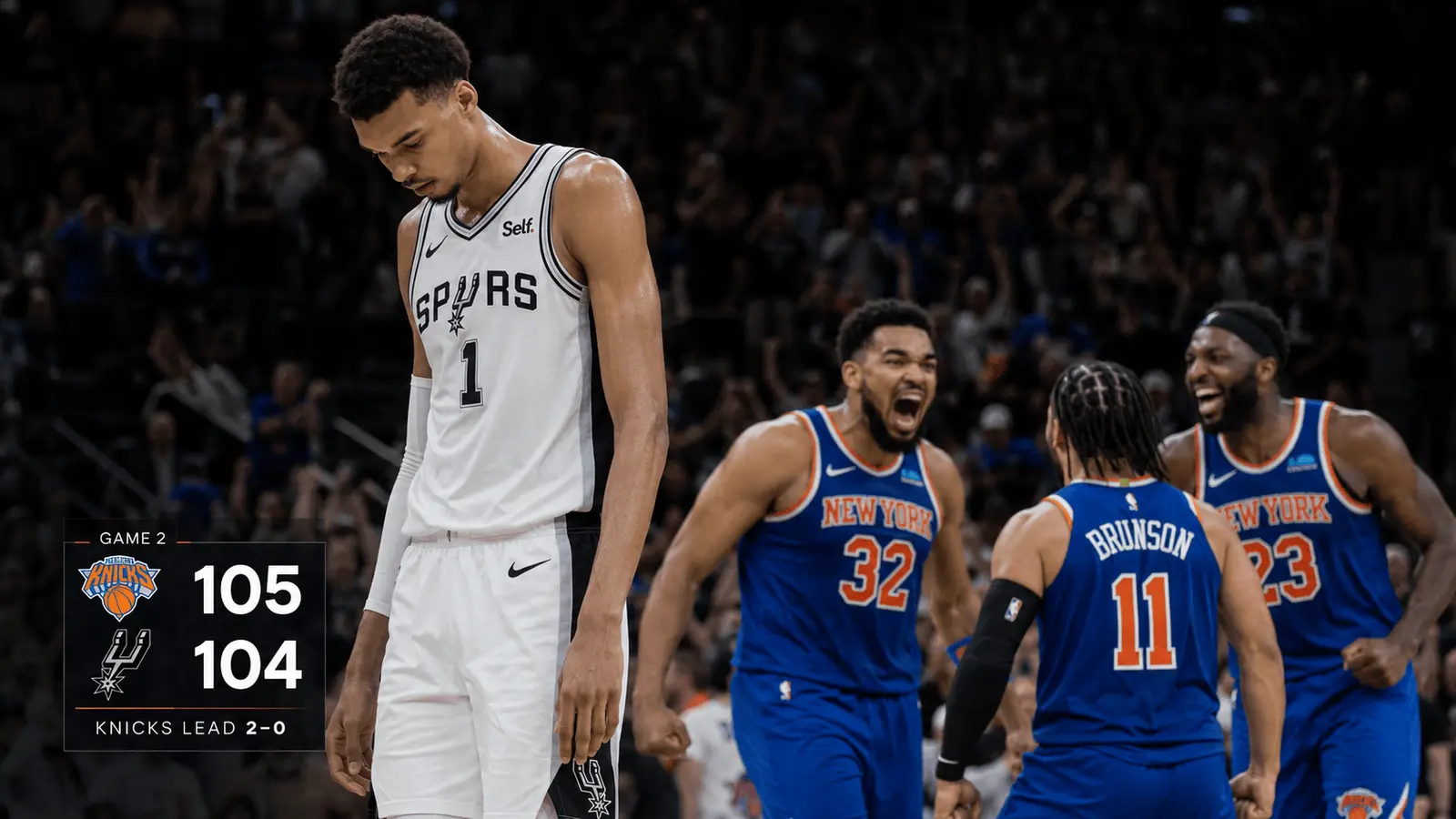
A tactical NBA analysis package focused on how teams should build structure around a generational big: Wembanyama’s role boundaries with the Spurs, Towns’ value as a modern playmaking center, and the broader question of whether elite talent is being supported by a coherent system.
Team Analysis
The Spurs’ Wembanyama Challenge: A Generational Talent Still Needs a System
The Spurs cannot let talent become a shortcut
Victor Wembanyama changes the geometry of an NBA game. He can protect the rim from impossible angles, stretch the floor, punish mismatches and make opponents question shots they would normally take without hesitation. That level of talent is rare enough that it can hide structural problems for long stretches.
But it should not be used as an excuse to avoid building structure.
The Spurs’ challenge is not simply to put the ball in Wembanyama’s hands more often. It is to decide when he should create, when he should finish, when he should anchor the defense and when someone else must take responsibility for organizing the possession.
A young franchise center should not also be the entire hierarchy
There is a dangerous temptation with a player like Wembanyama: because he can do almost everything, the team starts asking him to do everything. That is where the balance becomes fragile.
A franchise big can be the defensive identity, a late-clock release valve and a major offensive hub. But if he is also expected to calm the group, initiate transition, direct teammates, make every clutch read and define the emotional tone of the team, the burden becomes excessive.
That is not a question of whether Wembanyama is good enough. It is a question of whether the surrounding structure is mature enough.
The best young teams usually need three stabilizers around a rising superstar:
- a coaching staff with non-negotiable tactical principles;
- guards who can turn rebounds and stops into organized offense;
- veteran or secondary voices who can manage pressure without handing every possession back to the star.
Without those layers, even elite talent can drift into improvisation.
The outlet pass is a system detail, not a small detail
One of the most important tactical questions for a big like Wembanyama is what happens after the defensive rebound.
If he rebounds, puts the ball on the floor and tries to lead the break himself, the possession can look spectacular. It can also become vulnerable: long limbs, a high dribble point and traffic around the middle of the floor increase the risk of a loose handle or a rushed decision.
The cleaner option is often immediate outlet basketball. Pass beats dribble. When the ball reaches a guard or wing early, Wembanyama can sprint into the lane, trail into a three, seal a smaller defender or become the second-side decision-maker. That gives him multiple ways to affect the play without forcing him to be the entire play.
This is the kind of detail that separates highlight potential from playoff-level possession management.
Role clarity is not limiting Wembanyama — it is protecting his ceiling
Some fans hear “move him closer to the rim” or “reduce the self-created possessions” and interpret it as a lack of ambition. It is the opposite.
Role clarity does not mean shrinking Wembanyama. It means placing his touches where they create the most pressure. Deep catches, quick decisions, elbow actions, short-roll reads, trail threes and defensive-to-offensive transitions can all be part of a superstar role. The key is sequencing.
If every possession begins with Wembanyama solving the first problem, the Spurs become easier to load up against. If the system creates the first advantage and lets him attack the second one, his efficiency and control should rise.
The real question for San Antonio
The Spurs do not need to decide whether Wembanyama is the future. That answer is obvious.
They need to decide what kind of environment that future requires.
A generational center can elevate a team’s floor by himself. A championship-level team, however, needs a system that tells even its best player when to dominate, when to defer, when to pass early and when to finish the possession. Wembanyama’s next leap may be less about adding another skill and more about the Spurs building the structure that lets his existing skills win the right possessions.
Player Performance
Wembanyama vs. Towns Is a Study in Two Different Types of Modern Big Man Value
Two modern centers, two different questions
Victor Wembanyama and Karl-Anthony Towns represent two very different versions of the modern NBA center.
Wembanyama is the rare player whose defensive presence changes shots before they happen. He can erase space vertically, challenge guards on the perimeter and turn ordinary possessions into uncomfortable decisions for the opponent. His value starts with size and length, but it is amplified by mobility and skill.
Towns, meanwhile, offers a more polished offensive model. His value is not only that he can score. It is that he can bend a defense from several zones on the floor: above the arc, at the elbow, facing up, rolling into space, or making the next pass when a cutter appears.
That contrast is what makes the comparison interesting.
Towns’ high-post value is about more than assists
When a center can operate from the high post, the offense becomes harder to flatten. The ball is no longer stuck on the perimeter, and the defense cannot simply load up on one side.
Towns is dangerous in that role because he can punish almost every coverage choice:
- sag off, and he can shoot;
- press too high, and he can attack off the bounce;
- send help, and he can find cutters or shooters;
- switch smaller defenders, and he can use his size inside.
That kind of versatility is especially valuable because it forces opposing rim protectors away from their comfort zone. A shot-blocking big wants to live near the basket. A high-post creator makes him defend decisions, not just shots.
Wembanyama’s next stage is decision economy
Wembanyama does not lack ability. The more important issue is decision economy: choosing the simplest high-value action instead of the most ambitious one.
For a young franchise big, that can mean:
- making the early outlet pass after a rebound;
- sealing deeper before asking for the ball;
- using fewer dribbles in traffic;
- catching on the move rather than starting static possessions;
- trusting guards to initiate before attacking the advantage they create.
None of that reduces his importance. It increases the quality of his touches.
The most mature big men understand that dominance is not always about personally starting the action. Sometimes it is about finishing it, redirecting it or forcing the defense to overreact before the ball even arrives.
The lesson from Towns
Towns is not the same kind of defender as Wembanyama, and he does not have the same physical ceiling. But offensively, he offers a useful lesson: a big man can control a game by becoming the connective tissue of the attack.
The modern center is not just a post scorer or a rim runner. He is a spacing device, a passing hub, a matchup manipulator and a pressure point.
That is where Wembanyama’s development becomes fascinating. If he combines his defensive range with cleaner offensive sequencing, quicker outlets and more disciplined touch selection, the Spurs will not merely have a spectacular player. They will have a player whose gifts are easier to translate into winning possession after possession.
The difference matters. Talent creates fear. Structure creates repeatability.
Controversy and Talking Points
Are the Spurs Asking Too Much of Wembanyama Too Soon?
The easy debate is blame. The better debate is responsibility.
When a young superstar makes a late decision that does not work, the reaction is usually extreme. One side protects the player at all costs. The other side treats one possession as proof of a fatal flaw.
That is the wrong frame for Victor Wembanyama.
The more useful question is not whether he is special. He is. It is not whether he should be held accountable. He should. The real issue is whether the Spurs are defining his responsibilities clearly enough.
A franchise player still needs boundaries
Basketball development is not simply giving a gifted player more freedom every season. Freedom without structure can become confusion.
For Wembanyama, the line is delicate. You want him to experiment because his ceiling is tied to unusual skills for his size. But you also want him to learn which plays are worth the risk in high-leverage moments.
A seven-foot-plus big bringing the ball up after a rebound may be thrilling. It may also be less efficient than a fast outlet to a guard, followed by a sprint into early offense. A difficult self-created possession may be impressive. A deep seal, quick swing pass or short-roll read may be more damaging to the defense.
The controversy is not whether Wembanyama should expand his game. It is whether expansion is being matched by discipline.
Coaches and guards cannot disappear from the hierarchy
A young superstar should not be the only organizer of a young team. In pressure moments, the chain of command matters.
The coaching staff must define the preferred action. The point guard or primary ball-handler must manage tempo. Veterans and secondary creators must help stabilize possessions. The franchise player should lead, but leadership cannot become a vacuum where everyone waits for him to solve the next problem.
If that happens, the team risks confusing talent with infrastructure.
Accountability can be constructive
Wembanyama’s development should be discussed with balance. Criticizing a decision is not the same as doubting the player. In fact, the best organizations are usually the ones that can challenge their stars without turning every correction into a public drama.
The Spurs’ job is to make the game easier for Wembanyama in the right ways: cleaner outlets, better spacing, more reliable guard initiation, stronger half-court triggers and clearer late-clock rules.
His job is to keep learning when to use the spectacular option and when to make the simple one.
That is not a small step. For a generational talent, it may be the step that separates breathtaking potential from championship-level control.